Online orders are back! • ⚠️ Beware of scams and fake accounts • Our official Instagram is @mahalekshmisilks• For enquiries, use the contact numbers listed in our official social media video descriptions
Online orders are back! • ⚠️ Beware of scams and fake accounts • Our official Instagram is @mahalekshmisilks• For enquiries, use the contact numbers listed in our official social media video descriptions

Bridal Kanchipuram Saree Trends 2026: Pastel Shades, Lightweight Weaves & Minimal Zari
Date: 28 September 2026
A bridal Kanchipuram saree continues to be one of the most treasured choices for South Indian weddings. Known for its rich silk texture, distinctive borders, traditional motifs and ceremonial elegance, the Kanchipuram saree has remained a favourite across generations.
In 2026, however, bridal preferences are becoming more versatile. Brides are not moving away from tradition; instead, they are choosing new ways to interpret it. Softer colours, lighter drapes, understated zari and elegant tissue textures are becoming increasingly popular alongside classic red, maroon, green and gold sarees.
The biggest bridal Kanchipuram saree trends for 2026 focus on four major directions: pastel shades, lightweight weaves, minimal zari and tissue-inspired bridal styles.
These trends make it easier for brides to create wedding looks that feel luxurious, comfortable and personal while still respecting the heritage of traditional South Indian bridal dressing.
Why Bridal Kanchipuram Sarees Continue to Be a Wedding Favourite
Kanchipuram sarees have a strong connection to South Indian weddings because they combine craftsmanship, tradition and visual richness.
A traditional Kanchipuram saree is usually recognised by its silk body, contrasting border, detailed pallu and traditional woven motifs. Designs are often inspired by temple architecture, nature and heritage elements associated with South Indian culture.
For many families, a bridal Kanchipuram saree is more than a wedding outfit. It may become part of the bride's long-term wardrobe and can later be worn for festivals, anniversaries, family weddings and special occasions.
This sense of longevity is one of the reasons brides continue to invest in a beautifully chosen Kanchipuram saree.
Another reason is versatility. Today, the same saree tradition can support completely different bridal personalities.
A bride who prefers a regal look may choose deep red with prominent gold zari.
A bride who loves minimal styling may choose ivory with a subtle border.
A modern bride may select pastel pink, lavender or mint.
A bride looking for soft glamour may choose a tissue Kanchipuram saree in champagne gold.
This flexibility allows the Kanchipuram saree to remain relevant even as bridal fashion evolves.
1. Pastel Kanchipuram Sarees Are Becoming a Major Bridal Trend
Pastel shades are one of the most noticeable bridal trends in 2026.
While deeper colours will always remain important in Indian wedding fashion, modern brides are increasingly exploring softer tones that create a romantic and sophisticated appearance.
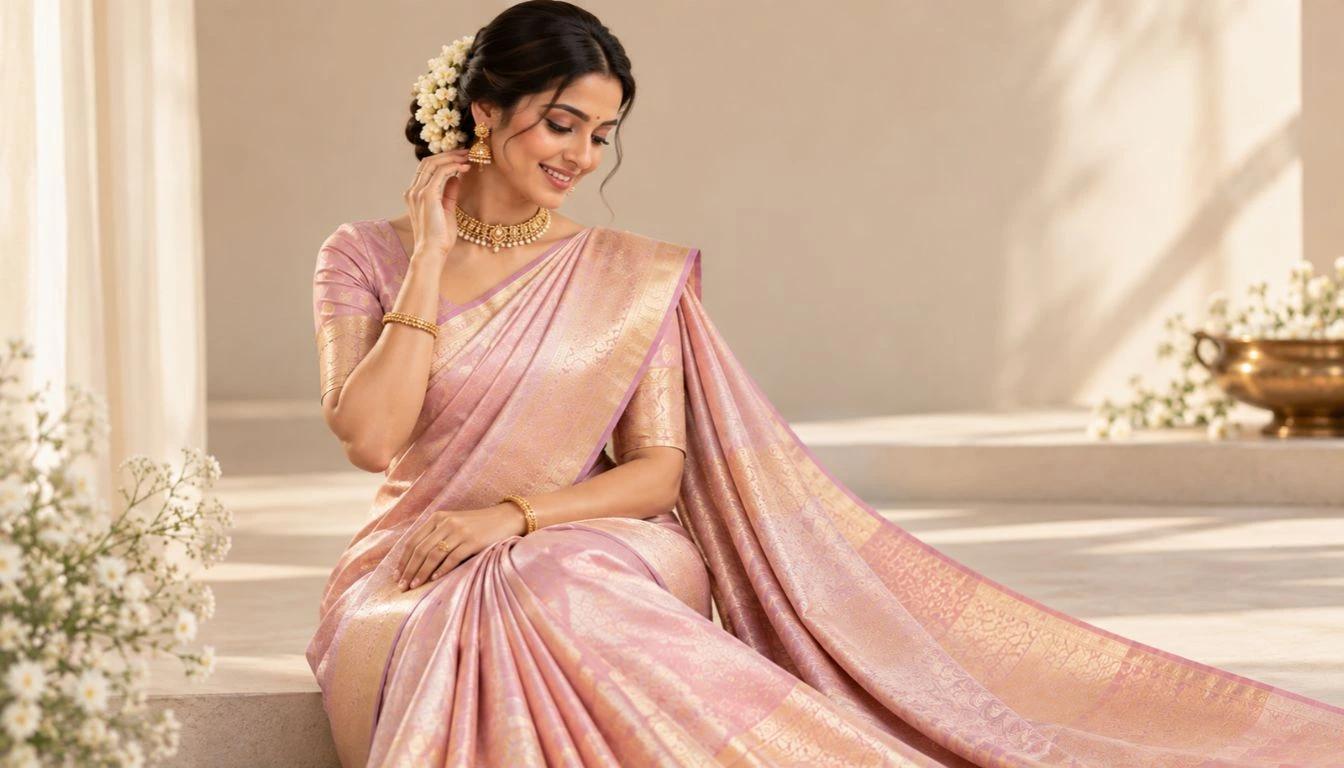
A pastel Kanchipuram saree gives brides the richness of a traditional silk saree while creating a lighter and more contemporary visual impression.
Pastels are especially suitable for daytime weddings, engagements, intimate ceremonies and brides who prefer subtle elegance over very bold colour combinations.
Blush Pink Kanchipuram Sarees
Blush pink is one of the most popular pastel choices for brides because it creates a soft and feminine look.
A blush pink bridal Kanchipuram saree with delicate gold zari can look traditional enough for a wedding ceremony while still feeling fresh and modern.
Brides can style blush pink with antique gold jewellery for a more traditional appearance. Diamond jewellery, pearls or emerald accents can also create a refined contemporary look.
The shade works especially well for engagement ceremonies, morning weddings and elegant reception styling.
Peach Kanchipuram Sarees
Peach is another beautiful choice for brides who want a warm pastel shade.
It creates a softer alternative to orange, coral or traditional red while still looking festive.
Peach works particularly well when combined with muted gold, rose gold or antique zari.
A peach Kanchipuram saree can also be paired with a contrasting blouse in maroon, deep green or gold if the bride wants to introduce more traditional depth into the outfit.
Lavender Kanchipuram Sarees
Lavender is increasingly popular among brides who want an unconventional but elegant bridal colour.
It offers a modern alternative to pink and purple without looking too dramatic.
A lavender saree with silver-toned or muted gold detailing can work beautifully for receptions and evening functions.
For jewellery, diamonds, pearls and minimal gemstone pieces can complement the softness of the shade.
Mint Green Kanchipuram Sarees
Mint green creates a refreshing bridal look, especially for daytime ceremonies.
The colour is elegant without being too bright and pairs beautifully with traditional gold zari.
A mint green Kanchipuram saree can be styled with antique gold temple jewellery for a traditional appearance or with minimal gold accessories for a cleaner modern look.
It can also work well for pre-wedding ceremonies where the bride wants something lighter than her main wedding saree.
Powder Blue Kanchipuram Sarees
Powder blue is suitable for brides who prefer a cool-toned palette.
It creates a sophisticated bridal look and works beautifully with silver-toned embroidery, diamond jewellery or light gold detailing.
Powder blue is especially attractive for engagement ceremonies, receptions and destination weddings where the overall wedding décor uses neutral or pastel colour palettes.
Ivory and Cream Kanchipuram Sarees
Ivory and cream are among the most elegant options for brides who prefer understated luxury.
These shades are particularly suitable for brides who love the visual simplicity of a Kerala wedding saree but want the texture, structure and detailing associated with Kanchipuram silk.
An ivory Kanchipuram saree can be styled with traditional gold borders, temple motifs or subtle contrast detailing.
For Kerala brides, ivory and gold are especially appealing because they complement traditional bridal jewellery and floral hairstyles beautifully.
2. Lightweight Kanchipuram Sarees Are Making Bridal Dressing More Comfortable
Comfort has become a much bigger consideration in modern bridal fashion.
Wedding ceremonies can last several hours, and brides often need to sit, walk, perform rituals, pose for photographs and interact with guests while wearing heavy jewellery.
Because of this, many brides are looking for sarees that offer the richness of traditional silk without feeling excessively heavy.
A lightweight Kanchipuram-style saree can make the bridal experience more comfortable while still maintaining a formal and luxurious appearance.
Why Brides Are Choosing Lightweight Sarees
One major reason is ease of movement.
A lighter saree is often easier to walk in and more comfortable during long ceremonies.
It can also make pleating and draping easier, especially for brides who are not accustomed to wearing heavy silk sarees regularly.
Another advantage is that lightweight sarees are easier to restyle after the wedding.
A very elaborate bridal saree may only be suitable for major occasions, whereas a lighter Kanchipuram saree can be worn again for festivals, family functions and celebrations.
Are Lightweight Kanchipuram Sarees Suitable for the Main Wedding Ceremony?
Yes, they can be.
The suitability depends on the design rather than weight alone.
A lightweight saree with a refined border, elegant pallu and strong bridal colour can still look ceremonial and luxurious.
For brides who want a traditional appearance, lightweight sarees can be paired with layered gold jewellery, traditional hair styling and a richly detailed blouse.
For brides who prefer minimal styling, the same saree can be paired with one statement necklace, elegant earrings and softer makeup.
Best Occasions for Lightweight Bridal Sarees
Lightweight Kanchipuram sarees are particularly suitable for engagements, morning weddings, destination weddings, receptions and long wedding ceremonies.
They can also be a practical second saree for brides who plan to change their outfit between the ceremony and reception.
3. Minimal Zari Is Redefining Bridal Luxury
Heavy zari has long been associated with bridal sarees, but modern brides are increasingly discovering that luxury does not always have to mean excess.
Minimal zari allows the quality of the silk, colour and weaving to become more visible.
Instead of extremely broad borders and heavily filled pallus, brides are choosing cleaner patterns, narrow zari lines, delicate motifs and restrained metallic detailing.
This creates a sophisticated bridal look that feels elegant rather than overwhelming.
Why Minimal Zari Works So Well With Pastel Sarees
Pastel colours already have a soft and refined character.
When too much heavy zari is added, the subtle beauty of the colour can sometimes be lost.
Minimal zari allows the pastel shade to remain the main focus.
For example, a blush pink saree with a narrow gold border can look more graceful than a heavily ornamented version.
Similarly, ivory or mint green sarees can feel more modern when the zari is used selectively.
Minimal Zari for Modern Bridal Styling
Minimal zari also works well with modern jewellery.
Brides who prefer diamonds, pearls or one statement necklace may find that a heavily embellished saree competes too much with their accessories.
A cleaner saree creates visual balance.
The result is a bridal look where the saree, jewellery, blouse, hairstyle and makeup complement one another rather than competing for attention.
Heavy Zari or Minimal Zari: Which Should a Bride Choose?
The choice depends on the bride's personal style and wedding setting.
Heavy zari is ideal for brides who love traditional grandeur and want their saree to become the strongest visual element in the bridal look.
Minimal zari is better for brides who prefer understated elegance, pastel colours or contemporary jewellery.
Brides can also combine both ideas by choosing a saree with a simple body and a more decorative border or pallu.
This allows the outfit to feel traditional without becoming too heavy.
4. Tissue Kanchipuram Sarees Are Bringing Soft Glamour to Bridal Fashion
Tissue Kanchipuram sarees are an attractive option for brides who love shimmer but do not want excessive embellishment.
Tissue-style sarees naturally reflect light, giving the fabric a subtle metallic glow.
This makes them particularly suitable for receptions, evening ceremonies and elegant wedding functions.
Why Tissue Sarees Work Well for Brides
One of the biggest advantages of a tissue saree is that the fabric itself creates visual interest.
A champagne gold or rose gold tissue saree can look luxurious even without extremely heavy embroidery.
This allows brides to keep jewellery and blouse styling relatively simple.
Tissue sarees also photograph beautifully because their surface reflects light softly.
This can create a rich appearance in both indoor and outdoor wedding photography.
Best Tissue Kanchipuram Colours for Brides
Champagne gold is one of the most elegant options because it feels luxurious without appearing too bright.
Rose gold is ideal for brides who prefer a romantic and feminine look.
Ivory gold can create a sophisticated bridal appearance and is especially suitable for Kerala weddings.
Soft silver-beige works well for evening functions and modern receptions.
Muted peach or blush tissue sarees can also be beautiful for brides who want a combination of pastel colour and metallic texture.
How to Style a Tissue Kanchipuram Saree
The key is to avoid over-styling.
Because tissue fabrics already have a luminous appearance, the jewellery does not need to be extremely heavy.
A diamond choker, pearl necklace, elegant gold necklace or carefully selected temple jewellery can be enough.
The blouse can also remain relatively simple.
A matching tissue blouse, raw silk blouse or blouse with minimal embroidery can maintain the elegance of the saree.
For hairstyles, a neat bun with flowers creates a traditional appearance, while soft waves or a sleek open hairstyle can make the outfit feel more contemporary.
5. Kerala Wedding Saree Aesthetics Are Influencing Modern Kanchipuram Styles
Kerala bridal fashion is strongly associated with elegant ivory, cream and gold colour combinations.
This aesthetic is increasingly being blended with Kanchipuram saree styling.
A bride may choose the familiar visual simplicity of a Kerala wedding saree but select a Kanchipuram weave or Kanchipuram-inspired border to add richness.
This creates a bridal look that feels culturally rooted while still appearing distinctive.
Ivory and Gold for Kerala Brides
Ivory with gold remains one of the most timeless combinations.
A Kanchipuram saree in this palette can be styled with layered gold jewellery, traditional jhumkas and a floral bridal hairstyle.
The simplicity of the saree allows the jewellery to become more prominent.
This is especially suitable for brides who want a traditional Kerala-inspired bridal look without choosing a very colourful saree.
Cream With Green or Maroon Borders
A cream saree with a dark green border creates a beautiful traditional contrast.
Similarly, cream with maroon can provide more warmth and depth.
These combinations are ideal for brides who want to retain the elegance of neutral colours while adding a stronger Kanchipuram influence.
Champagne and Soft Gold for Modern Kerala Weddings
For modern receptions and evening weddings, champagne and muted gold can offer a more contemporary alternative to classic ivory.
These shades maintain the warmth associated with Kerala wedding styling while creating a more luxurious finish.
6. Traditional and Modern Bridal Kanchipuram Sarees Can Both Look Timeless
Modern bridal trends do not mean traditional Kanchipuram sarees are becoming outdated.
Traditional red, maroon, green and royal blue sarees continue to hold a special place in bridal fashion.
The difference is that brides now have more options.
A traditional bride may choose a rich silk saree with a broad gold border, detailed motifs and layered jewellery.
A modern bride may choose pastel pink with a narrow zari border and diamond jewellery.
Another bride may combine both ideas by choosing a traditional motif in a modern pastel colour.
This ability to mix heritage and contemporary styling is one of the greatest strengths of the Kanchipuram saree.
Traditional Bridal Styling
Traditional styling usually focuses on deeper colours, heavier borders, more elaborate jewellery and classic hairstyles.
Temple jewellery, layered necklaces, gold bangles, jhumkas and floral buns are common choices.
The blouse may include embroidery, traditional motifs or elbow-length sleeves.
Modern Bridal Styling
Modern bridal styling is often cleaner and more restrained.
Brides may choose softer colours, narrower borders, minimal jewellery and contemporary blouse designs.
The overall look feels lighter and more editorial while still maintaining the elegance expected from wedding attire.
7. How to Choose the Right Bridal Kanchipuram Saree
Choosing the right saree requires more than selecting the most attractive colour.
The saree should suit the wedding ceremony, venue, jewellery and the bride's personal comfort.
Choose According to the Wedding Ceremony
For the main wedding ceremony, many brides prefer a more traditional saree because it photographs beautifully and carries a strong ceremonial presence.
For the reception or engagement, lighter colours and tissue sarees can offer more flexibility.
Brides attending multiple wedding functions can also use different Kanchipuram styles to create variety across the celebrations.
Consider the Wedding Time
Morning weddings usually work beautifully with pastel pink, peach, ivory, mint, cream and soft gold.
Natural daylight enhances these colours and creates a softer bridal appearance.
For evening weddings, champagne, rose gold, deep green, maroon and richer shades can look more dramatic under artificial lighting.
Consider Your Jewellery Before Choosing the Saree
Jewellery can completely change the final appearance of a saree.
If the bride plans to wear several layers of heavy gold jewellery, a simpler saree can create better balance.
If the jewellery is minimal, a more decorative border or pallu can help create a stronger bridal effect.
Choose the Right Blouse
The blouse should complement the saree rather than simply match it.
A traditional silk saree can be paired with an embroidered blouse for added richness.
A pastel saree can look beautiful with a contrasting blouse in a deeper tone.
A tissue saree often works best with a simple matching blouse or one with minimal embellishment.
The neckline and sleeve design should also complement the jewellery.
For example, a high-neck blouse works well with long necklaces, while a broader neckline can provide space for chokers and layered bridal jewellery.
8. How to Style a Pastel Kanchipuram Saree for a Bridal Look
Pastel Kanchipuram sarees require thoughtful styling because the colours are softer than traditional bridal tones.
Jewellery can help create contrast.
Antique gold works especially well with pastel pink, peach and mint green.
Diamonds can create a cleaner, more modern appearance.
Pearls are ideal for brides who prefer a delicate look.
The hairstyle should also match the overall aesthetic.
A floral bun creates a traditional appearance.
Soft curls or open hair can create a contemporary reception look.
Brides should also avoid using too many strong colours in makeup.
Neutral eyes, soft blush and a lip colour that complements the saree will usually create a more harmonious bridal look.
9. Best Bridal Kanchipuram Sarees for Different Wedding Functions
A bride does not need to wear the same style throughout every wedding event.
Different sarees can create different moods.
Engagement
Pastel Kanchipuram sarees are ideal for engagements because they look elegant without appearing as heavy as the main wedding saree.
Pink, lavender, mint and peach are excellent options.
Pre-Wedding Functions
Lightweight sarees work well for smaller ceremonies because they are comfortable and easy to manage.
Bright yellow, soft green, peach and pink can look festive without feeling too formal.
Main Wedding Ceremony
For the wedding ceremony, brides can choose either traditional silk or a refined modern alternative.
Red, maroon, green and gold remain timeless, while ivory, pastel pink and cream are strong choices for brides who prefer subtle colours.
Kerala Wedding
Ivory, off-white, cream and muted gold are especially beautiful for Kerala weddings.
A simple gold border can create a timeless appearance.
Brides who want more contrast can choose green or maroon detailing.
Reception
A tissue Kanchipuram saree is particularly suitable for receptions because it creates a soft glamorous effect under evening lighting.
Champagne gold, rose gold, silver beige and deep jewel tones can all work beautifully.
10. How to Choose a Kanchipuram Saree That You Can Wear Again
A bridal saree becomes more valuable when it can be styled again after the wedding.
Brides who want versatility should consider colours and designs that can work beyond the wedding day.
Pastel sarees are especially easy to restyle because they can be paired with simpler blouses and lighter jewellery.
Minimal zari sarees can also work well for festivals, anniversaries and family functions.
When choosing the bridal saree, consider whether the design feels too occasion-specific.
A balanced saree with elegant detailing will usually offer more long-term styling options.
11. What Makes a Bridal Kanchipuram Saree Look Expensive?
A luxurious bridal saree does not necessarily need to be the heaviest or most embellished.
Several design details can make a saree look refined.
The quality of the fabric plays an important role.
The way the saree falls and holds its structure can affect its overall appearance.
Colour balance is equally important.
A well-designed pastel saree with a clean border can look more sophisticated than a design containing too many competing colours.
The border should also complement the body of the saree.
The blouse, jewellery and styling then complete the overall bridal look.
In 2026, understated coordination is becoming just as important as ornamentation.
12. Why Brides Are Combining Tradition With Minimal Styling
Modern bridal fashion is increasingly focused on personal style.
Many brides want to look traditional without feeling overly styled.
This is why combinations such as pastel silk with temple jewellery, ivory sarees with traditional gold accessories and tissue sarees with classic bridal hairstyles are becoming so appealing.
The saree remains culturally meaningful, while styling choices make the look feel more personal.
The result is a bridal outfit that feels timeless rather than trend-dependent.
Which Kanchipuram saree is best for a bride?
The best bridal Kanchipuram saree depends on the wedding style and the bride's personal preference. Traditional brides may prefer red, maroon, green or rich gold sarees with prominent zari. Modern brides may prefer pastel colours, lightweight weaves, minimal zari or tissue sarees. The best choice is one that feels comfortable, photographs well and complements the bride's jewellery and wedding setting.
Are pastel Kanchipuram sarees suitable for weddings?
Yes. A pastel Kanchipuram saree can be suitable for the main wedding ceremony, engagement or reception. Pastels can still look highly bridal when paired with traditional jewellery, elegant zari and a well-designed blouse.
Which pastel colour is best for a bride?
Blush pink and peach are ideal for brides who prefer warm tones. Mint and powder blue are suitable for brides who prefer cooler shades. Ivory and cream are excellent for minimal bridal styling and Kerala weddings. Lavender is a beautiful choice for brides looking for something less conventional.
Is minimal zari suitable for bridal sarees?
Yes. Minimal zari can look very luxurious when combined with high-quality silk, strong colour balance and thoughtful styling. It is especially suitable for brides who prefer modern elegance over heavily embellished outfits.
Is a tissue Kanchipuram saree suitable for a bride?
Yes. A tissue Kanchipuram saree is an excellent choice for receptions, engagements and contemporary wedding ceremonies. Its subtle metallic finish creates a naturally festive appearance.
Which Kanchipuram saree is best for a Kerala wedding?
Ivory, cream, off-white and muted gold sarees are particularly suitable for Kerala weddings. They can be paired with traditional gold jewellery and floral hairstyles for a timeless bridal appearance.
Are lightweight Kanchipuram sarees good for brides?
Yes. Lightweight sarees are especially suitable for brides who want easier movement and greater comfort during long wedding ceremonies. They can still look formal and luxurious when chosen with the right border, pallu and blouse.
What jewellery suits a pastel Kanchipuram saree?
Antique gold, temple jewellery, pearls and diamonds can all complement pastel sarees. The best choice depends on the zari colour and the overall styling theme.
Can a Kanchipuram saree be reused after the wedding?
Yes. Pastel colours, minimal zari and lightweight designs are particularly easy to reuse for festivals, anniversaries and family events. Choosing a versatile blouse and changing the jewellery can completely transform the same saree.