Online orders are back! • ⚠️ Beware of scams and fake accounts • Our official Instagram is @mahalekshmisilks• For enquiries, use the contact numbers listed in our official social media video descriptions
Online orders are back! • ⚠️ Beware of scams and fake accounts • Our official Instagram is @mahalekshmisilks• For enquiries, use the contact numbers listed in our official social media video descriptions

Traditional vs Modern Dhavani Designs: Which Style Is Right for You?
Date: 18 August 2026
The dhavani is one of the most graceful traditional outfits associated with South Indian fashion. Combining a skirt, blouse and draped upper fabric, the outfit creates the elegant appearance of a saree while offering the structure and comfort of a coordinated three-piece ensemble.
Over the years, dhavani designs have evolved from traditional silk and zari styles into a wide variety of contemporary designs featuring pastel colours, lightweight fabrics, designer blouses, embroidery and modern silhouettes.
This evolution has created two broad style preferences: traditional dhavani designs and modern dhavani designs.
Why Are Dhavani Designs Becoming Popular Again?
Traditional Indian clothing continues to inspire contemporary fashion, and the dhavani is a good example of how heritage clothing can be adapted for modern preferences.
Modern designers and ethnic-wear brands are experimenting with:
- New colour combinations
- Lightweight fabrics
- Contemporary blouse designs
- Embroidery
- Floral prints
- Modern borders
- Pastel shades
- Pre-stitched elements
- Updated silhouettes
This has made the dhavani appealing not only to people looking for traditional clothing but also to younger shoppers looking for something different from a saree or lehenga.
Kerala-inspired dhavani styles have also developed their own visual identity by incorporating kasavu-inspired borders, embroidery and contemporary colour combinations.
Traditional Dhavani Designs
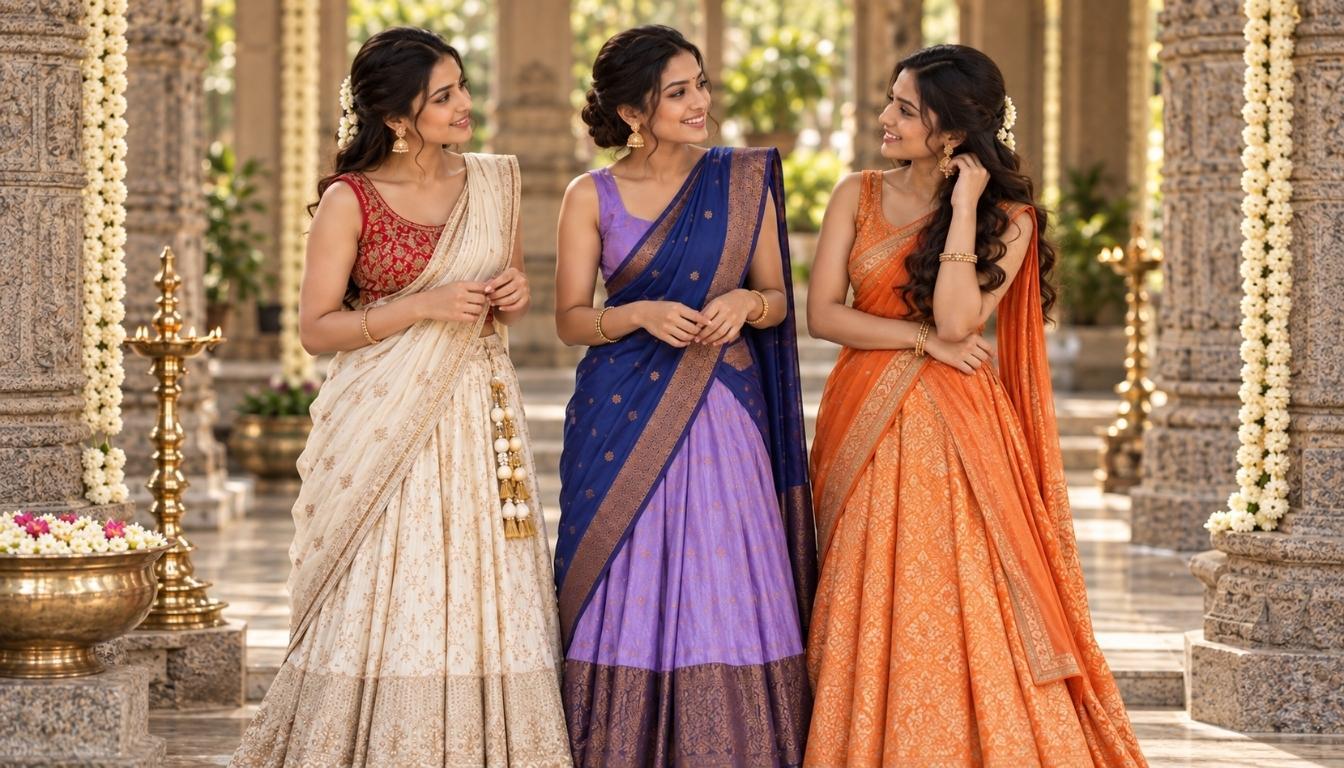
Traditional dhavani designs celebrate the timeless character of the classic South Indian half-saree, combining rich colours, traditional fabrics, classic borders, intricate zari detailing, coordinated skirts and blouses, and heritage-inspired motifs. The elegant draping and traditional styling make dhavani sets especially popular for weddings, cultural functions, religious occasions, and festive celebrations. Popular colour choices include vibrant shades such as red, maroon, green, royal blue, purple, mustard, orange, and magenta, along with timeless cream, off-white, and gold tones. Contrasting colour combinations are particularly favoured, such as a deep green skirt paired with a gold-bordered drape and contrasting blouse, or maroon, red, and royal blue ensembles enhanced with rich gold detailing. By focusing on traditional colours, fabrics, borders, and motifs rather than excessive modern embellishments, traditional dhavani designs create a graceful, elegant, and authentically South Indian appearance.
Modern Dhavani Designs
Modern dhavani designs retain the graceful silhouette of the traditional South Indian half-saree while incorporating contemporary fashion elements for a fresh and stylish appearance. These designs often move beyond rich traditional colours and heavy borders, embracing pastel shades, minimal embellishments, floral patterns, lightweight fabrics, designer borders, delicate embroidery, modern prints, subtle colour combinations, and statement sleeve details. Popular colours include baby pink, peach, lavender, powder blue, mint green, lilac, soft yellow, dusty rose, beige, champagne, sage green, and ivory, making modern dhavani sets especially suitable for daytime functions, engagement ceremonies, and contemporary festive celebrations. The blouse also plays an important role in defining the overall look, with modern styles featuring sleeveless cuts, puff and statement sleeves, boat necks, high necks, square necklines, embroidered yokes, contemporary back designs, and contrasting colours. While these details add a fashionable touch, the blouse should complement the skirt and drape to maintain a balanced appearance. By combining the traditional half-saree silhouette with refined contemporary details, modern dhavani designs offer an elegant and versatile choice for today's celebrations.
Which Dhavani Style Is Right for You?
Choosing between a traditional and modern dhavani becomes easier when you consider the occasion and your personal style.
Choose a Traditional Dhavani If You Prefer Classic Fashion
A traditional dhavani may be ideal if you love:
- South Indian silk
- Gold zari
- Rich colours
- Traditional motifs
- Classic jewellery
- Heritage-inspired styling
- Elegant and timeless outfits
Traditional designs work particularly well for weddings and cultural celebrations.
Choose a Modern Dhavani If You Prefer Contemporary Fashion
A modern dhavani may be a better choice if you prefer:
- Pastel shades
- Lightweight fabrics
- Minimal styling
- Modern blouse designs
- Contemporary prints
- Subtle embellishment
- Fashion-forward colour combinations
These styles can work beautifully for engagements, festive gatherings, college events and modern celebrations.
Best Dhavani Designs for Onam
Onam is one of the most important occasions for Kerala-inspired traditional clothing.
Kerala's iconic festive clothing is strongly associated with the white, cream and gold kasavu aesthetic. Kerala Tourism describes Kerala sarees and mundu as traditional garments associated with festivals, weddings and cultural events.
Kerala's kasavu textile tradition is particularly connected with Onam, with off-white fabrics and golden zari borders forming a recognisable festive style.
A dhavani can interpret this aesthetic beautifully.
White and Gold Dhavani
An off-white or cream skirt paired with a gold-bordered dhavani creates an elegant Kerala-inspired look.
Kasavu-Inspired Dhavani
A gold border combined with cream fabric can bring traditional Kerala styling into the half-saree silhouette.
Cream Dhavani With Contrast Blouse
You can introduce a subtle colour contrast with:
- Green
- Maroon
- Red
- Mustard
- Pink
Modern Pastel Onam Dhavani
If you prefer contemporary fashion, pastel pink, lavender, peach or mint combined with subtle gold details can create a modern festive Onam Dhavani look.
Contemporary Onam dhavani is increasingly exploring ways to move beyond a strictly conventional kasavu look while retaining the visual connection to Kerala's traditional style.
Best Dhavani Designs for Weddings
Dhavani designs can make beautiful wedding and pre-wedding outfits.
For Traditional Wedding Functions
Consider:
- Silk dhavani
- Gold zari borders
- Deep red
- Maroon
- Green
- Royal blue
- Traditional motifs
- Gold jewellery
These elements create a rich and formal appearance.
For Engagement Functions
A lighter contemporary design can be a beautiful choice.
Consider:
- Pastel pink
- Peach
- Lavender
- Powder blue
- Tissue
- Lightweight silk
- Embroidered blouse
- Minimal jewellery
For Wedding Guests
A wedding guest dhavani does not need to be heavily embellished.
A coordinated skirt, elegant blouse and graceful drape can create a sophisticated festive outfit without looking overly bridal.
How to Choose the Right Dhavani Fabric
Fabric affects both the appearance and comfort of your outfit.
Cotton Dhavani
Cotton is a practical choice for:
- Daytime events
- Onam
- Cultural programmes
- Warm weather
- Outdoor celebrations
Its breathable nature can make it comfortable for Kerala's warm climate.
Silk Dhavani
Silk works well for:
- Weddings
- Engagements
- Formal ceremonies
- Traditional celebrations
Its rich texture and natural sheen create a luxurious appearance.
Tissue Dhavani
Tissue fabrics can provide a light, festive appearance and work well for:
- Evening functions
- Engagements
- Parties
- Contemporary ethnic styling
Lightweight Contemporary Fabrics
For modern dhavani designs, lightweight fabrics can create a softer and more fluid appearance while making the outfit easier to wear for longer periods.
Traditional or Modern Dhavani: Which Is Better?
Traditional dhavani designs are ideal for someone who appreciates heritage fashion, rich fabrics, zari borders and classic South Indian styling.
Modern dhavani designs are better suited to someone who enjoys contemporary colours, lightweight fabrics and updated silhouettes.
For many occasions, however, the most attractive option may be a combination of both.
A traditional border with a contemporary colour, a classic silk skirt with a modern blouse or a Kerala-inspired cream-and-gold dhavani with minimal styling can create an elegant balance between old and new.
The beauty of dhavani designs lies in their ability to beautifully blend tradition with evolving fashion trends. Traditional dhavani designs preserve the elegance of South Indian attire through rich colours, silk fabrics, zari borders, and classic styling, while modern dhavani designs reinterpret this heritage with pastel shades, contemporary blouses, lightweight fabrics, fresh patterns, and updated silhouettes. Whether you are dressing for Onam, Vishu, a Kerala wedding, an engagement, a cultural event, or a family celebration, there is a dhavani style to suit every occasion. You can choose a timeless traditional design, embrace a contemporary half-saree, or combine elements of both styles to create a look that feels uniquely yours. Ultimately, the right dhavani is one that makes you feel comfortable, confident, and connected to the occasion. Traditional or modern, the dhavani continues to prove that timeless Indian fashion can evolve without losing its cultural charm.
What is the difference between traditional and modern dhavani designs?
Traditional dhavani designs generally use rich colours, silk, zari and classic styling. Modern dhavani designs may use pastel colours, lightweight fabrics, contemporary blouse designs, prints and modern embellishments.
Which dhavani is best for Onam?
A cream, off-white or white-and-gold dhavani is an excellent choice for a Kerala-inspired Onam look. You can also choose a contemporary pastel dhavani with subtle gold detailing for a modern festive appearance.
Which fabric is best for a dhavani?
The best fabric depends on the occasion and climate. Cotton and lightweight fabrics are suitable for warm-weather daytime events, while silk and richer fabrics are appropriate for formal celebrations.
What jewellery looks good with a dhavani?
Gold jewellery, jhumkas, bangles, traditional necklaces and temple-inspired accessories complement traditional dhavani designs. Modern dhavani outfits can also be paired with minimal or statement jewellery.
How should a dhavani be styled for a traditional Kerala look?
A cream or off-white dhavani with gold detailing, traditional jewellery, a simple hairstyle and jasmine flowers can create a Kerala-inspired festive appearance.
How should I choose a dhavani for a wedding?
Consider a silk or richly detailed dhavani for formal wedding functions. Choose the colour and embellishment level according to the ceremony and whether you are the bride, bridesmaid or guest.