Online orders are back! • ⚠️ Beware of scams and fake accounts • Our official Instagram is @mahalekshmisilks• For enquiries, use the contact numbers listed in our official social media video descriptions
Online orders are back! • ⚠️ Beware of scams and fake accounts • Our official Instagram is @mahalekshmisilks• For enquiries, use the contact numbers listed in our official social media video descriptions

Pure vs Fake: How to Verify the Authenticity of Kanchipuram Silk Sarees Online and Offline
Date: 10 December 2025
Kanchipuram silk sarees are not just garments. They are a legacy woven in silk, culture, and craftsmanship. Originating from the temple town of Kanchipuram, these sarees are known for their rich texture, pure mulberry silk, and real zari work. Because of their value and popularity, the market today is flooded with imitations that closely resemble the original.
Whether you are shopping online or visiting a physical store, knowing how to distinguish a pure Kanchipuram silk saree from a fake one is essential. This guide is written from a buyer's perspective, using practical checks that real weavers and silk experts rely on. The aim is to help you make an informed purchase with confidence.
What Makes a Kanchipuram Silk Saree Truly Authentic
Before learning how to spot a fake, it is important to understand what defines an original Kanchipuram silk saree.
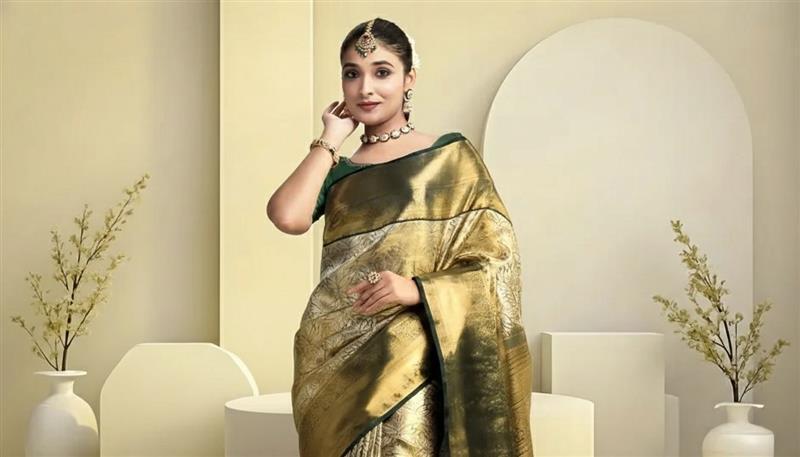
Authentic Kanchipuram sarees are woven using pure mulberry silk yarn. The zari used is traditionally made with silver wire coated in gold. The body, border, and pallu are usually woven separately and then interlocked, which makes the saree heavier and more durable.
These sarees are handwoven on traditional looms, often taking weeks to complete. This craftsmanship is the reason genuine Kanchipuram silk sarees are expensive and long-lasting.
How to Identify a Pure Kanchipuram Silk Saree Offline
Buying from a physical store allows you to use your senses. Touch, sight, and even sound can help you verify authenticity.
1. Feel the Weight and Texture
A genuine Kanchipuram silk saree feels noticeably heavier compared to artificial silk sarees. The silk has a firm yet smooth texture. When you hold it, the saree does not feel flimsy or overly soft like synthetic fabrics.
Pure silk also has a natural warmth when touched, unlike polyester or blended materials, which often feel cold.
2. Check the Zari Closely
Zari is one of the most reliable indicators of authenticity. Real zari will have a silk thread core wrapped with silver and gold plating. Fake zari usually uses plastic or copper-coated thread.
A simple test is to gently scratch the zari thread. If you see a red or white thread inside, it is fake. A pure zari thread reveals a silver tone underneath.
3. Look at the Weaving Technique
In an authentic Kanchipuram saree, the border and pallu are woven separately and joined seamlessly with the body. You can slightly stretch the saree near the joint area. If the weave remains firm and does not loosen, it indicates traditional interlocking. Printed borders or glued designs are clear signs of imitation.
4. The Sound Test
This may sound unusual, but pure silk makes a subtle crunching sound when rubbed together. This sound comes from the natural protein structure of silk fibers. Artificial silk does not produce this sound.
5. Ask for the Silk Mark Certification
Always ask for the Silk Mark label issued by the Silk Mark Organisation of India. While this alone does not guarantee zari purity, it does confirm the silk used is natural. Reputable stores will always provide proper bills, certification, and details about the saree's origin.
How to Verify Authenticity When Buying Kanchipuram Sarees Online
Online shopping offers convenience but also increases the risk of counterfeit products. Here is how to stay safe.
1. Read the Product Description Carefully
A genuine seller will clearly mention:
- Pure mulberry silk
- Handloom weaving
- Real zari or tested zari
- Place of origin
If the description uses vague terms like "silk blend," "silk feel," or "art silk," it is not a pure Kanchipuram saree.
2. Study High-Resolution Images and Videos
Zoom in on the zari, borders, and pallu. Authentic Kanchipuram sarees have sharp, intricate motifs with clear weaving patterns. Blurred designs or overly shiny finishes often indicate machine-made or synthetic products.
Many trusted sellers now provide videos showing the saree drape and close-up details. This transparency is a positive sign.
3. Check the Seller's Credibility
Look for:
- Years of business presence
- Customer reviews with real photos
- Clear return and refund policies
- Physical store address or weaver association links
Avoid sellers offering "pure Kanchipuram silk" at unusually low prices. Authentic craftsmanship has a cost.
4. Ask Questions Before Buying
Do not hesitate to contact the seller. Ask about:
- Zari composition
- Loom type used
- Approximate weight of the saree
- Certification availability
A genuine seller will answer confidently and clearly. Vague or evasive responses are red flags.
Common Types of Fake Kanchipuram Sarees in the Market
Understanding the common imitations can help you avoid them.
Artificial silk sarees use polyester or nylon fibers but are marketed as silk. They are lightweight and overly glossy.
Tested zari sarees use a silver-colored alloy instead of real silver and gold. These are cheaper and tarnish quickly.
Power loom sarees imitate traditional patterns but lack the depth, durability, and finishing of handwoven pieces.
Printed sarees have designs printed on fabric rather than woven. These fade over time and do not qualify as authentic Kanchipuram silk.
Why Authenticity Matters Beyond Price
Buying a genuine Kanchipuram silk saree is not only about owning a luxury product. It is about supporting skilled artisans who have preserved this craft for generations.
Authentic sarees last for decades and are often passed down as heirlooms. Fake sarees lose their charm, fade quickly, and offer no long-term value.
From an ethical standpoint, purchasing original handloom products helps sustain rural livelihoods and protects traditional weaving techniques from extinction.
Verifying the authenticity of a Kanchipuram silk saree requires attention, patience, and awareness. Whether you shop online or offline, knowing what to look for protects you from counterfeit products and ensures your investment is worthwhile.
Trust your senses, research the seller, and never rush a purchase. A genuine Kanchipuram silk saree is not just clothing. It is history, artistry, and pride woven into every thread.
If you treat the buying process with care, you will own a saree that truly reflects the timeless beauty of Indian handloom tradition.
How can I identify a pure Kanchipuram silk saree?
A pure Kanchipuram silk saree is made from genuine mulberry silk and real zari. It feels heavy, has a firm texture, produces a mild silk sound when rubbed, and features borders and pallu woven separately and interlocked with the body.
What is the easiest way to spot a fake Kanchipuram silk saree?
Fake sarees often feel lightweight, overly shiny, and use artificial zari. Printed borders, glued designs, and terms like "silk blend" or "art silk" are strong indicators that the saree is not authentic.
Is Silk Mark certification enough to confirm authenticity?
Silk Mark certification confirms that the saree is made of natural silk, but it does not guarantee pure zari. For complete authenticity, both Silk Mark certification and verified zari details are important.
How can I verify Kanchipuram silk sarees when buying online?
Check for detailed product descriptions, high-quality images or videos, seller credibility, customer reviews, and transparent return policies. Avoid unrealistically low prices for "pure" Kanchipuram silk sarees.
What is the difference between real zari and tested zari?
Real zari is made using silver wire coated with gold, while tested zari uses metal alloys or copper. Real zari lasts longer and retains its shine, whereas tested zari may tarnish over time.
Why are original Kanchipuram silk sarees expensive?
Authentic Kanchipuram silk sarees are handwoven, use pure silk and zari, and require weeks of skilled labor. The price reflects craftsmanship, durability, and cultural heritage rather than just material cost.