Online orders are back! • ⚠️ Beware of scams and fake accounts • Our official Instagram is @mahalekshmisilks• For enquiries, use the contact numbers listed in our official social media video descriptions
Online orders are back! • ⚠️ Beware of scams and fake accounts • Our official Instagram is @mahalekshmisilks• For enquiries, use the contact numbers listed in our official social media video descriptions

Traditional and Modern Manthrakodi Saree Styles for Christian Brides
Date: 11 September 2026
A Manthrakodi saree holds a special place in many Kerala Christian wedding traditions. More than a bridal outfit, it is a meaningful wedding garment associated with family, blessing, tradition, and the beginning of married life.
For generations, Christian brides in Kerala have worn elegant cream, ivory, white, and gold Manthrakodi sarees as part of their wedding celebrations. Today, modern brides are also exploring lighter fabrics, contemporary borders, subtle colours, refined zari work, and updated blouse designs while preserving the traditional character of the Manthrakodi.
Whether you prefer a traditional Kerala Christian Manthrakodi or a more contemporary bridal saree, understanding the different styles can help you choose an outfit that feels both meaningful and timeless.
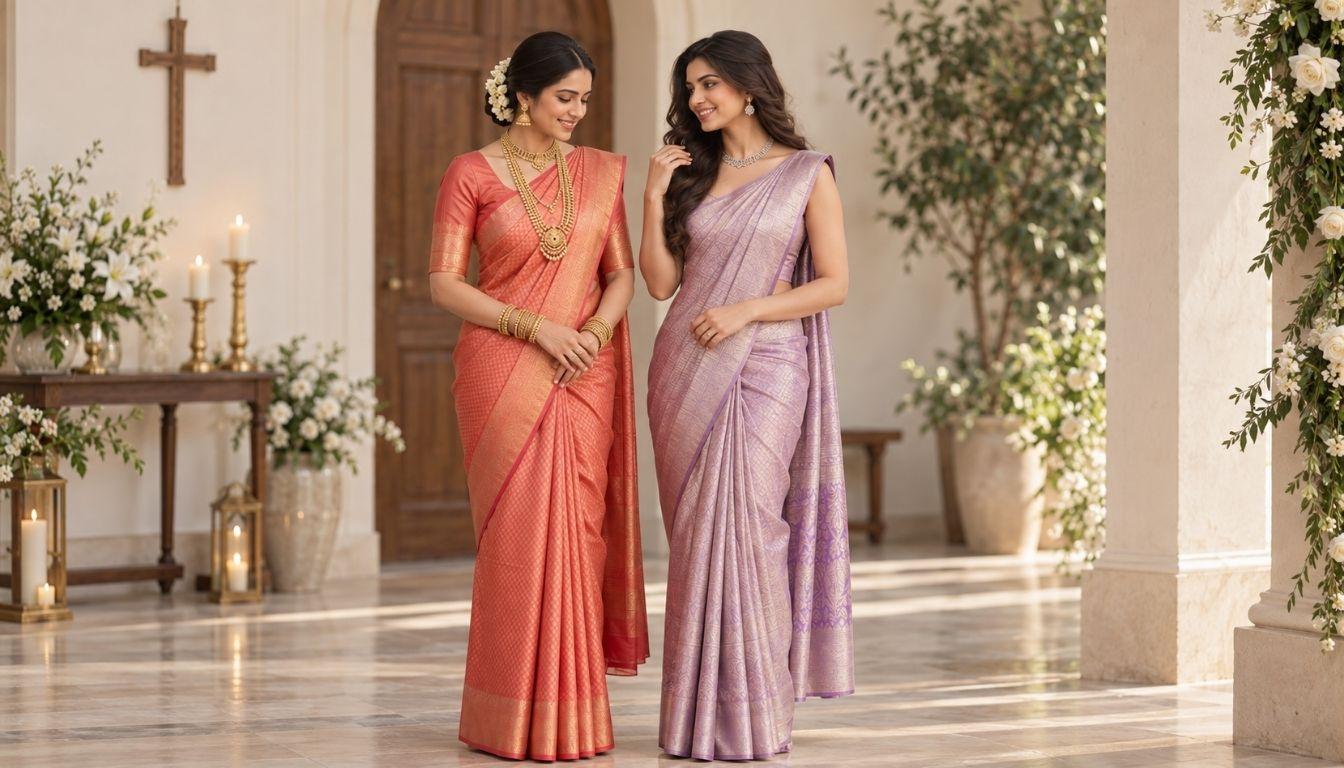
What Is a Manthrakodi Saree?
The Manthrakodi is traditionally a new saree presented to the bride by the groom's family during a Kerala Christian wedding. In several Kerala Christian traditions, it is blessed and ceremonially placed over the bride's head or shoulders during the wedding service. The exact ritual can vary between Christian denominations and families.
The word is commonly understood as referring to a blessed new garment, reflecting the ceremonial significance of the saree.
In some traditions, the Manthrakodi is also connected with the Minnu, the Christian wedding pendant. Sources describing Kerala Christian wedding customs note that threads for the Minnu may be taken from the Manthrakodi, although the details differ between communities.
This makes the saree more than a fashion choice. It becomes part of the wedding ritual itself.
Traditional Manthrakodi Saree Styles
Traditional Manthrakodi sarees are known for their graceful simplicity, rich fabric, and elegant gold detailing. The most familiar colour palette includes cream, ivory, off-white, and gold.
1. Classic Cream and Gold Manthrakodi
The classic cream and gold Manthrakodi saree remains one of the most recognisable choices for Kerala Christian brides.
A soft cream or ivory body paired with a traditional gold zari border creates an elegant bridal appearance without excessive embellishment.
This style is particularly suitable for brides who appreciate:
- Traditional Kerala aesthetics
- Minimal and graceful bridal fashion
- Classic gold zari borders
- Timeless photographs
- Simple but elegant bridal styling
The continuous gold border also creates a beautiful effect when the saree is draped over the bride's head and shoulder.
2. Kerala Kasavu-Inspired Manthrakodi
A Kerala-inspired Manthrakodi combines the traditional off-white or cream base with kasavu-style gold borders.
Although Manthrakodi traditions vary between Christian communities, cream and gold remain strongly associated with Kerala wedding attire. Contemporary Kerala bridal fashion also continues to reinterpret traditional kasavu elements through modern fabrics and silhouettes.
For a classic appearance, choose:
- Ivory or cream body
- Traditional gold zari
- Medium or broad border
- Minimal woven motifs
- Matching gold blouse
3. Silk Manthrakodi Saree
Silk provides a rich and traditional appearance while giving the saree a beautiful structured drape.
A silk Manthrakodi can feature a plain body with an elaborate border or subtle woven motifs throughout the saree.
Soft silk, Kanjivaram-inspired silk, and other South Indian silk variations are often considered by modern brides, although the ideal fabric depends on the desired drape and the specific family or church tradition.
The saree should not only look beautiful but also remain manageable when it is ceremonially placed over the bride's head.
Modern Manthrakodi Saree Styles
Modern Christian brides are increasingly looking for ways to retain the emotional and cultural significance of the Manthrakodi while expressing their individual fashion preferences.
4. Ivory Manthrakodi with Contemporary Gold Border
For a sophisticated modern look, an ivory saree with a refined gold border is an excellent choice.
Instead of a very heavy traditional border, brides can choose:
- Slim zari borders
- Antique-gold detailing
- Geometric woven patterns
- Minimal metallic motifs
- Contemporary pallu designs
This style keeps the traditional colour palette while giving the saree a lighter and more modern appearance.
5. Tissue Silk Manthrakodi
Tissue silk can create a luminous bridal appearance without necessarily making the saree look heavily embroidered.
Its subtle sheen works particularly well with:
- Ivory
- Champagne
- Soft gold
- Beige
- Pale cream
Modern brides often consider lighter fabrics when they want a saree that photographs beautifully while remaining comfortable during a long wedding day.
6. Organza-Inspired Contemporary Manthrakodi
For brides who prefer a lighter and more delicate appearance, organza or organza-like silk blends can provide a crisp drape and subtle texture.
A simple ivory organza saree with a gold border can create a refined contemporary look among bridal sarees.
However, because the Manthrakodi may be placed over the bride's head, the fabric should be selected for both appearance and practicality. The saree needs to fall comfortably rather than becoming difficult to manage.
7. Subtle Pastel Manthrakodi Sarees
Modern bridal fashion has expanded beyond traditional cream and gold.
Some brides may prefer subtle shades such as:
- Champagne
- Blush
- Dusty rose
- Soft beige
- Pale peach
- Light gold
These colours can be incorporated while keeping the overall design understated and suitable for the ceremonial character of the Manthrakodi.
When choosing a non-traditional colour, it is important to consider the customs of the bride's family and church community.
8. Rich Border with Minimal Body
A modern Manthrakodi does not always need heavy embroidery.
A plain or minimally patterned body combined with a beautifully designed border can create a luxurious appearance.
This style works particularly well when the bride wants the attention to remain on:
- The saree border
- The bridal jewellery
- The Minnu
- The blouse
- The overall drape
A simple body also allows the gold border to remain visually prominent when the saree is placed over the head.
Choosing the Right Manthrakodi Fabric
Fabric plays an important role in a Manthrakodi because the saree is not simply worn around the body. It may also be lifted and placed over the bride's head or shoulders during the ceremony.
Silk
Silk offers a traditional and luxurious appearance with a structured drape.
Soft Silk
Soft silk can provide the richness of silk while being easier to handle than some heavier weaves.
Tissue Silk
Tissue silk gives the saree a luminous appearance and can work well for brides who prefer a lighter visual effect.
Silk Cotton
Silk cotton can provide a balance between traditional texture and everyday comfort, depending on the weave and construction.
Organza and Lightweight Fabrics
These can create a delicate contemporary appearance, although the bride should check that the saree is comfortable and secure for the ceremonial draping.
How to Choose the Manthrakodi Border
The border is one of the most noticeable features of a traditional Manthrakodi.
Traditional Broad Gold Border
A broad zari border creates a classic Kerala bridal appearance and photographs beautifully.
Medium Gold Border
A medium border is suitable for brides who want traditional detailing without an overly heavy appearance.
Minimal Gold Border
A narrow border gives the saree a modern, understated appearance and works particularly well with ivory or champagne fabrics.
Antique Gold Border
Antique gold can create a softer, slightly muted appearance compared with bright yellow-gold zari.
The border should also be considered from a practical perspective. If the saree is used in a ceremonial ritual involving threads from its border in a particular tradition, the family should confirm the required construction with the person responsible for the ceremony before purchasing.
Manthrakodi Blouse Ideas for Christian Brides
The blouse can change the overall character of the Manthrakodi saree.
For a traditional bridal look, consider:
- Full-sleeve blouse
- Three-quarter sleeves
- High-neck blouse
- Gold brocade blouse
- Plain silk blouse with zari detailing
For a modern look:
- Structured blouse
- Minimal embroidery
- Textured ivory blouse
- Contemporary sleeve design
- Subtle antique-gold detailing
For church ceremonies, brides should also consider the dress expectations of their particular church and family tradition.
Jewellery to Wear with a Manthrakodi Saree
Traditional jewellery can complement the simplicity of a Manthrakodi beautifully.
Depending on the bride's Christian community and family tradition, jewellery may include:
- Minnu
- Gold chains
- Pearl jewellery
- Gold earrings
- Jhumkas
- Bangles
- Traditional Kerala necklaces
The Minnu is especially significant in Kerala Christian wedding traditions and is associated with the marriage ceremony. Its exact design and the way it is worn can vary among Christian communities.
A bride wearing a richly bordered Manthrakodi can often keep the rest of the styling balanced so that the saree, jewellery, and ceremonial details complement rather than compete with each other.
Traditional vs Modern Manthrakodi Styling
Traditional styling generally focuses on cream, ivory, gold, silk, traditional zari borders, and classic jewellery.
Modern styling may introduce lighter fabrics, refined borders, subtle pastel shades, contemporary blouse designs, and minimalist accessories.
The two approaches do not have to be completely separate. A bride can choose a traditional cream silk saree with a contemporary blouse, or a modern ivory tissue saree with a classic gold border and traditional jewellery.
This combination allows the Manthrakodi to remain connected to its cultural significance while reflecting the bride's individual style.
How to Choose the Right Manthrakodi Saree
Before purchasing a Manthrakodi, consider these important points:
Check Your Family and Church Tradition
Manthrakodi customs are not identical across all Kerala Christian denominations. Confirm the expected colour, fabric, draping method, and ceremonial requirements with the family and church.
Prioritise the Drape
Because the saree may be placed over the head and shoulder, choose a fabric that falls comfortably and does not feel excessively heavy.
Consider the Wedding Setting
A daytime church ceremony may suit a lighter ivory or cream saree, while a richer silk can work beautifully when the bridal look continues into the reception.
Balance the Border and Jewellery
A heavily detailed saree may not need equally elaborate accessories. A simple Manthrakodi can provide more room for statement jewellery.
Think Beyond the Wedding Day
Many brides choose to preserve their Manthrakodi as a sentimental wedding keepsake. Selecting a timeless design rather than an extremely trend-driven style can make the saree meaningful for years to come.
Manthrakodi Saree for Kerala Christian Weddings
The Manthrakodi is particularly associated with Kerala Christian wedding traditions, including communities with Syrian Christian heritage. However, wedding customs differ among Syro-Malabar, Syro-Malankara, Mar Thoma, Orthodox, Jacobite, CSI, Latin Catholic, and other Christian communities.
Therefore, there is no single Manthrakodi style that applies identically to every Christian wedding in Kerala.
The most important approach is to preserve the traditions followed by the bride's family and church while choosing a saree that suits her personal style.
What is a Manthrakodi saree?
A Manthrakodi is traditionally a new saree presented to the bride by the groom's family in several Kerala Christian wedding traditions. It is associated with the wedding ceremony and may be blessed and ceremonially placed over the bride's head or shoulders.
What colour is traditionally used for a Manthrakodi?
Cream, ivory, off-white, and gold are widely associated with traditional Kerala Christian Manthrakodi styles. However, colours and customs can vary between families and denominations.
Which fabric is best for a Manthrakodi?
Silk and soft silk are traditional-looking choices, while tissue silk and lighter fabrics can provide a more contemporary appearance. The fabric should be comfortable enough for the ceremonial draping.
Can a Manthrakodi be modern?
Yes. Modern brides can choose contemporary borders, lighter fabrics, subtle pastel tones, minimalist designs, or updated blouse styles while retaining traditional elements.
Is a Manthrakodi the same as a regular wedding saree?
Not necessarily. In Kerala Christian wedding traditions, the Manthrakodi has a specific ceremonial and familial significance and is associated with the wedding ritual itself.
What jewellery goes with a Manthrakodi saree?
Gold jewellery, the Minnu, traditional Kerala necklaces, earrings, bangles, and pearl accents can complement a Manthrakodi. The exact jewellery traditions vary among Christian communities.
Can a bride wear a Manthrakodi after the wedding?
Yes. Some brides preserve their Manthrakodi as a sentimental keepsake, while others may later wear it for special occasions. Its long-term use depends on the bride and family.