Online orders are back! • ⚠️ Beware of scams and fake accounts • Our official Instagram is @mahalekshmisilks• For enquiries, use the contact numbers listed in our official social media video descriptions
Online orders are back! • ⚠️ Beware of scams and fake accounts • Our official Instagram is @mahalekshmisilks• For enquiries, use the contact numbers listed in our official social media video descriptions

How Have Kerala Sarees Evolved With Modern Fashion Trends?
Date: 23 September 2025
Kerala sarees with their eternal beauty of white and gold borders are an integral part of Kerala's culture. They were historically referred to as Kasavu sarees, which are considered a symbol of festive occasions, temple visits, and sacramental ceremonies. Over the recent decades, however, these sarees have evolved beyond being just traditional wear, much like how Kanchipuram Silk Sarees have also adapted to modern trends. They have been altered in terms of design, drapery fashion, choice of fabric, and even how they are accessorized, and thus have become a modern-day style statement for the contemporary world. This evolution of Kerala sarees shows how tradition can evolve elegantly into modern fashion without sacrificing its roots.
The Cultural Origin of Kerala Sarees
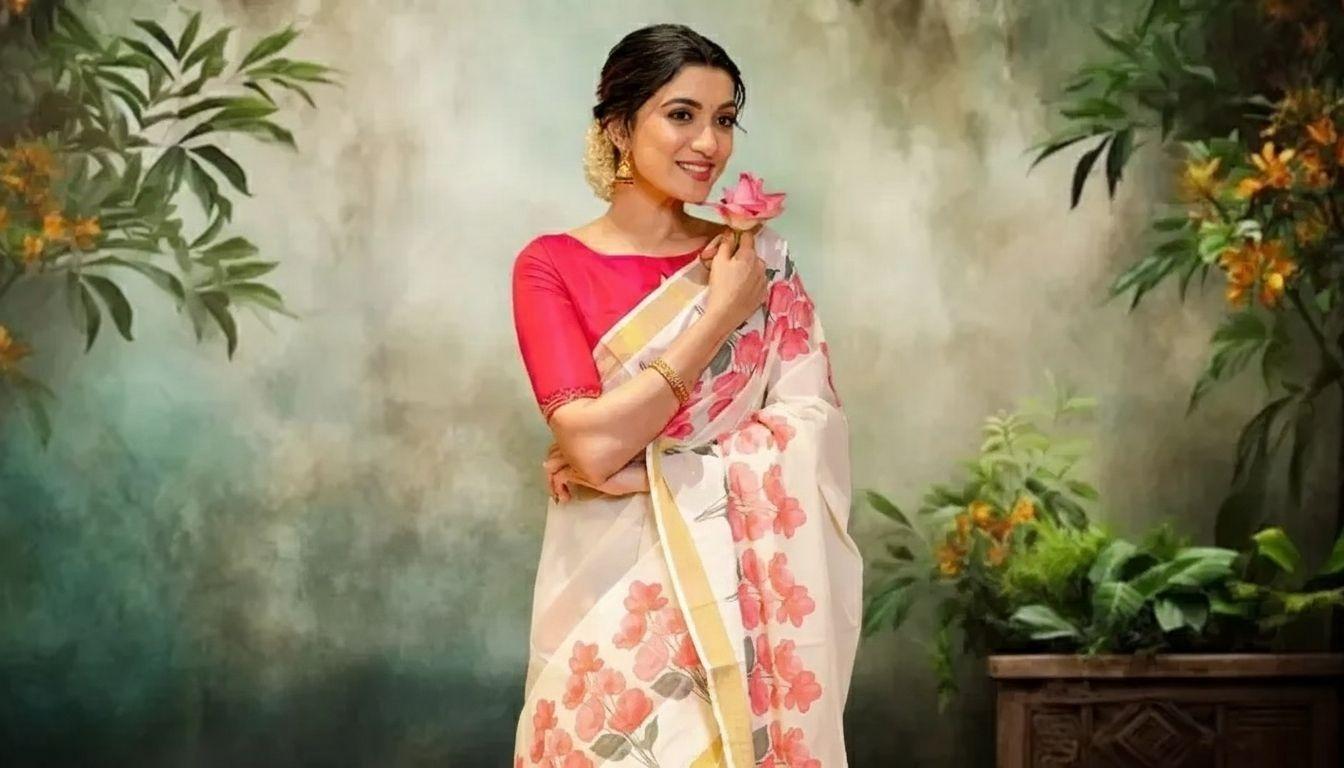
Prior to understanding the modern makeover of Kerala sarees, it is significant to acknowledge their origin in culture. The Kerala saree or Kasavu traditionally used to be crafted with fine cotton of an off-white hue and a strong golden-colored zari border. Its simplicity was symbolic of purity and elegance and, preferably, in harmony with the values of Kerala culture. The dress was especially iconic during the Onam festival where women throughout the state wore it as a sign of tradition and harmony. Weddings as well adopted the Kerala saree as a focal costume, connoting richness and elegance.
For several decades, the Kerala saree was untouched by fashion trends, being a traditional garment. The currents of contemporary fashion soon started molding it into fresh shapes that gain attraction not just for the women of Kerala but also for saree enthusiasts worldwide.
Experimentation With Borders and Patterns
Among the most prominent developments in Kerala sarees has been how designers played with borders. The golden zari border used to be the identifying characteristic, but now, the women are looking for variations that bring in freshness but without losing the essence. Silver zari edged borders have gained popularity as a fashionable option, offering modest sophistication for those who wish to break away from golden glimmer.
Additionally, temple motifs, floral patterns, checks, and thread work have begun appearing on the borders, giving the sarees a modern look without losing their traditional beauty. Even some younger ones have maroon, green, or navy blue border colors, which not only enhance their beauty but also provide versatility in blouse compatibility.
The Effect of Weaves and Fabrics
The center theme of Kerala sarees still remains cotton but to keep up with the demands of modern women, designers have been experimenting with new fabrics. Kerala sarees today are also manufactured in silk, tissue, georgette, and linen blended fabrics. Each of the materials gives a different personality—silk provides glamour for weddings, tissue imparts the festive look, and linen lends ease and comfort for office or daily wear.
These fabric innovations have made Kerala sarees grow from a traditional festival wear, and now they are available to be dressed up for various occasions. Their lighter adaptations are especially popular among the younger generation who crave comfort and fashion.
Contemporary Draping Styles
Though the conventional drape continues to be lauded for its grace, younger girls have reinterpreted the Kerala saree through innovative drapes. Pleats are done differently, pallu lengths are tried out, and sarees are even draped in lehenga-style for events. The half-saree draping fashion style has also become popular, particularly with wedding bridesmaids.
In urban fashion, Kerala sarees are even paired with designer belts, crop tops, or statement blouses providing a fusion touch. These fresh draping trends have made the saree run parallel to changing fashion trends while drawing young fashion-conscious people.
Blouses as a Fashion Statement
Arguably the most updated Kerala saree modernization is in the blouse patterns. Kerala sarees were worn with simple blouses of gold, green, or maroon colors. Now, the blouse is the center of attraction of the overall ensemble. From silk and brocade blouses to intricately embroidered or mirror work blouses, the choices are endless. Some even match the saree with contrasting designer blouses, creating a bold touch on the otherwise subdued outfit.
High-neck, sleeveless, cape-style, and puff-sleeve blouses are in fashion among young women who wish to try something new while sporting a Kerala saree. The stylistic change in blouse styles has positioned the saree to suit weddings, parties, and even contemporary office events.
Kerala Sarees in Bollywood and Fashion Shows
Another reason why Kerala sarees are popular with the modern masses is that they feature in popular culture. Bollywood models and actresses have adopted these sarees at Onam-themed cultural events, fashion shows, and parties. Designers brought Kerala sarees into the national mainstream with modern reinterpretations, giving them the credentials of not just traditional wear but also as a fashion icon.
This exposure has made the saree fashionable across Kerala and converted it into an aspiration dress among women from across India and even Indian expatriates. The mixing of tradition and glamour has positioned Kerala sarees on the fashion map of India.
Bridal Kerala Sarees: Fusion of Traditional and Modern
Weddings have always been the centerpiece ceremony for Kerala sarees. In the earlier times, brides would adorn themselves in basic golden-lined Kasavu sarees, which symbolized prosperity and elegance. Today, bridal Kerala sarees have undergone an awe-inspiring makeover. Heavier zari work, elaborate embroidery, sequins, and fashionable pallu styles are now accepted, which make them even more luxurious. Even brides opt for Kerala sarees with silk or temple jewelry designs as weft, taking the saree to a royal bride's attire.
This evolution shows how Kerala sarees have been anchored to tradition but have come to compete with the grandeur of modern weddings.
Kerala Sarees in the Global Runway
The popularity of Kerala sarees has not been limited to India. With the globalization and emergence of e-commerce, Kerala sarees have turned into a face for Indian ethnic wear for global buyers. Designers today innovate on fusion details such as combining Kerala sarees with jackets, long coats, or Western-inspired accessories for international consumers. Fashion bloggers on social media have also been responsible for trends of new Kerala saree styling, making the garment a part of mainstream global fashion discourse.
Sustainability and Handloom Revival
With the modern fashion world, there has been an emphasis on sustainability. Kerala sarees, especially handloom Kasavu sarees, are perfectly placed for this. Handcrafted by skilled weavers, these sarees are eco-friendly and durable. With customers today increasingly seeking sustainable fashion, Kerala sarees are back in vogue as an eco-friendly option that is as much about celebrating craftsmanship and yet being a kind to the earth.
Official campaigns and fashion initiatives have also pointed towards the importance of propagating handloom Kerala sarees, bestowing them a contemporary usability that brings their heritage in relation to sustainable fashion practices.
The Kerala saree journey from traditional wear to contemporary fashion statement is a transformation success story. What was once a plain cotton drape bordered in gold has evolved into a multi-purpose garment that finds home at weddings, parties, offices, and international runways. With advances in borders, fabrics, drape styles, and blouse designs, Kerala sarees have emerged to stay in sync with the latest fashion trends while retaining their heritage.
Why are Kerala sarees white with golden borders traditionally?
Kerala sarees are golden bordered and white because the combination of colors signifies cultural simplicity, prosperity, and purity. The golden zari shines out the celebratory feel, while the white shade portrays calmness, thus being ideal for traditional events.
What materials are made up of modern Kerala sarees?
While Kerala sarees of olden days used to be created from cotton, nowadays they come in silk, tissue, georgette, and linen combinations. They are thus apt for wedding functions, party wear, and everyday use.
Are Kerala sarees suitable for contemporary events?
Yes, Kerala sarees are extremely versatile today. They can be styled in contemporary fashion, with latest blouses, or with statement pieces belted, and it is perfect for traditional as well as modern occasions.
In what way are Kasavu sarees distinct from Kerala set sarees?
Kasavu sarees are long-length zari border sarees, and Kerala set sarees are two pieces of garment, a mundu (lower cloth) and neriyathu (drape). Both are same in white and gold appearance but different in draping style.
Are handloom Kerala sarees popular even today?
Yes, handloom Kerala sarees are becoming more prominent in the light of the world's shift towards sustainable fashion. They are sustainable, handwoven, and valued for their individuality and craftsmanship.
What blouse designs would complement Kerala sarees?
Modern blouse types such as brocade, embroidered, sleeveless, cape-type, and multicolored blouses are now being blended with Kerala sarees, hence being in vogue.