Online orders are back! • ⚠️ Beware of scams and fake accounts • Our official Instagram is @mahalekshmisilks• For enquiries, use the contact numbers listed in our official social media video descriptions
Online orders are back! • ⚠️ Beware of scams and fake accounts • Our official Instagram is @mahalekshmisilks• For enquiries, use the contact numbers listed in our official social media video descriptions

Why Is Kanchipuram Saree Considered a Bridal Essential in South India?
Date: 15 August 2025
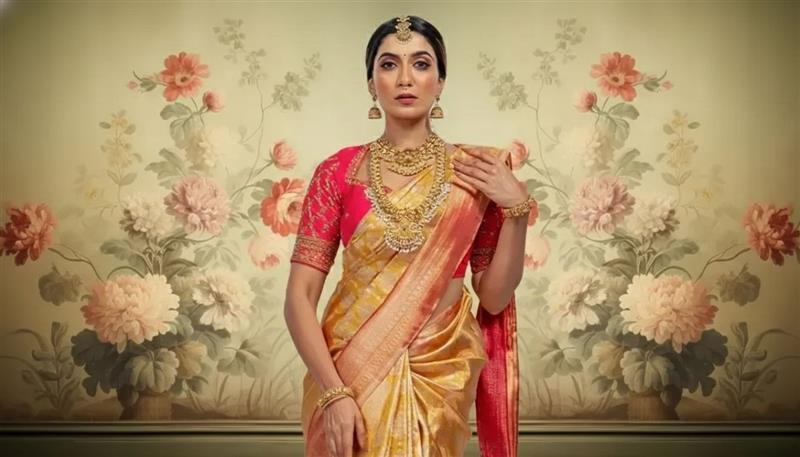
At South Indian weddings, the Kanchipuram saree is a sacred cloth that few others can equal. It's not so much an alternate choice in what to wear—it is a custodian of tradition, a symbol of pride, and a richly charged cultural icon. A South Indian bride wearing her Kanchipuram saree is not just preparing herself for the wedding day but is taking the steps of her elders in line with the family's tradition. The silk, the intricate gold zari borders, and the vibrant colors speak a language of festivity and respect that belongs only to this place. For most families, the wedding Kanchipuram saree is not just bought—it is chosen with deliberation, at times after searching for days for the ideal pattern and color that will reflect the bride's new beginning. It is a cherished possession, at times stored reverently and passed on from generation to generation as an heirloom. What makes it so important is not only its visual grandeur but also its emotional and religious significance. It is the moment that a woman embarks upon a new chapter of life—enveloped in tradition, rich in heritage, and adorned with the everlasting.
A Legacy Woven in Silk
The village of Kanchipuram in the Tamil Nadu state, where Andhra Pradesh weavers arrived and were settled by monarchs, is where Kanchipuram sarees first appeared more than 400 years ago. Even though the custom changed throughout time, people's respect for the saree simply grew. All Kanchipuram sarees are still woven by hand by weavers who follow age-old methods of weaving learned from generations.
It is this tradition that turns the saree into something greater than a garment. It becomes part of the bride herself, a living tradition that she carries with her when she marries. Wearing a Kanchipuram saree on her wedding day is a way to honor the woman's ancestry as well as that of her family and community.
A Color for Every Blessing
Kanchipuram sarees are renowned for the rich and divine colors they bear, each with a meaning of its own. The bridal color of choice is red, which represents fertility, wealth, and fresh life. Gold symbolizes wealth and divinity. Green symbolizes growth and peace. Brides usually choose colors not only because they look good on them, but also because they want to bring about that in their married life.
The combination of vivid hues and contrasting frames transforms each saree into a narrative artwork. Color selection is a prayer in itself—an unexpressed aspiration worked into the cloth.
Sacred Motifs and Divine Inspirations
The designs in Kanchipuram sarees are not arbitrary motifs. They are extremely religious and culturally meaningful. Peacocks, which stand for beauty and love, temple boundaries, which represent divinity, chakras, mangoes (paisley), and elephants are all linked to the blessings of power, prosperity, and holy protection.
The majority of bridal sarees are directly inspired by South Indian temple carvings, making them an extension of the sacred space. When the bride wears such a saree, she is adorned with symbols of heavenly protection and favor in addition to being elegantly dressed.
The Ritual of Choosing the Bridal Saree
Buying the bridal Kanchipuram saree is a custom for the majority of South Indian households. Mothers, aunts, grandmothers, and even the bride visit silk shops—sometimes going to Kanchipuram itself—to search through scores of designs. This searching, touching, and forming an emotional bond with the saree is an intensely bonding experience.
It's not uncommon for families to spend half a day or longer deciding on the "right" one. There's giggling, reminiscing, and even tears as older women recall their own weddings. Once the ideal saree is discovered, it's not only a buy—it's an experience imprinted in time.
Bridal Looks Rooted in South Indian Culture
The foundation of all South Indian wedding dress is the Kanchipuram saree. The classic braid-flowers, the kamarbandh, the long necklace, the maang tikka, and the temple jewelry all shine more against heavy saree textures. For the entire wedding ensemble, it is the canvas.
The saree's ability to maintain its shape, pleat, and support layers of jewelry is unique. There is no other fabric that can match ceremonial weight and grandeur like Kanchipuram silk.
Kanchipuram Sarees in Every Wedding Ceremony
With the exception of the muhurtham (wedding ceremony), Kanchipuram sarees are draped throughout the wedding ceremony, from haldi ceremonies and engagements to receptions and post-wedding ceremonies. Even brides wear multiple Kanchipuram sarees for different occasions, with a variety of designs and colors on show.
Even in life after the wedding, a Kanchipuram saree is the bride's first preference for her first post-marital festivals as a wedded lady, temple worship with the in-laws, and other such special occasions. It is her first choice when tradition demands.
A Saree That Tells Stories Across Generations
One of the most poignant things about Kanchipuram sarees is the manner in which they are maintained and passed down. These days, brides frequently wear their mother's wedding saree as their primary garment or even as part of their pre-wedding rituals.
These sarees become family heirlooms—not due to cost but due to the memories attached. Tears, blessings, footsteps around the hallowed fire—everything lingers within the folds of the saree, waiting to be draped by the next bride in the family.
Regional Styles in Kanchipuram
Even though both Kanchipuram sarees use the same high-quality silk and weaving designs, geographical preference guides the style. Deep reds and golds with ornate temple borders may be the choice for Tamil Nadu brides, while Telugu brides may prefer squares of different colors and large pallu patterns. Kerala brides like to use white or cream Kanchipuram sarees with weighty golden zari as their reception or wedding attire.
This diversification contributes depth to the tradition, showing how the saree has been tailored to local and individual identities without diluting universal appreciation.
Investment in Craft and Quality
Kanchipuram sarees are not cheap—and they should not be. Every saree is a labor of love, and according to complexity, weaving takes 10 to 30 days. The finest materials are utilized, such as pure silk, soaked silver zari in gold, and natural pigments.
Far from being a luxury for most families to purchase a bridal Kanchipuram saree—instead, it is an investment in tradition, artisanship, and excellence that will be enduring across generations.
The Soul of a South Indian Bride
A South Indian bride wrapped in a Kanchipuram saree is not merely dressed—she is cared for, envied, and embellished with the richest customs her civilization has to give. The saree is a canvas of memories, virtues, prayers, and future goals; it is more than just fabric and gold.
In a universe where bridal fashion is a season-to-season affair, the Kanchipuram saree is the one universal that stays constant in its cultural moorings yet continues to evolve in its style. It continues to tell the tales of yesterday while draping every bride with the promise of tomorrow's beauty.
Why is the Kanchipuram saree so significant for South Indian brides?
The Kanchipuram saree is a long-standing South Indian tradition that reflects elegance, prosperity, and cultural heritage. With its luxurious silk, rich colors, and gold zari edges, it is ideal to commemorate one of the holiest moments in a woman's life—marriage. It's not only a garment; it's a traditional piece of clothing handed down from generation to generation.
Why are Kanchipuram sarees unique compared to other silk sarees?
Kanchipuram sarees are woven from pure mulberry silk and authentic silver zari dyed in gold. Borders and pallu are usually ingeniously joined and weaved apart to provide the saree a firmer, more luxurious appearance. Their intricate temple-themed designs and strength set them apart from other silk types.
Are Kanchipuram sarees heirlooms?
Yes, several families keep bridal Kanchipuram sarees for years. It's not unusual for a mother or grandmother to hand over her wedding saree to the next family bride. Such sarees have emotional, cultural, and even sometimes spiritual meaning, so they are precious heirlooms.
What are the most popular colors used in bridal Kanchipuram sarees?
Classic bridal hues such as red, maroon, green, and gold are preeminent because of their meanings—prosperity, fertility, and good fortune. Contemporary brides are also venturing into pastel colors, two-tone colors, and contrast borders to reflect individual style while remaining grounded in tradition.
How long does it take to weave a bridal Kanchipuram saree?
Depending upon the design complexity, anywhere from 10 days to more than a month would be required to hand-weave a Kanchipuram saree. Sarees with heavy zari work or intricate designs take more time and labor.
Are sarees from Kanchipuram suitable for all body types?
Yes, Kanchipuram sarees fit all body forms because of the silk's weight and texture. The fabric is easy to fold and creates a fashionable silhouette, which is a stunning option for any bride.