Online orders are back! • ⚠️ Beware of scams and fake accounts • Our official Instagram is @mahalekshmisilks• For enquiries, use the contact numbers listed in our official social media video descriptions
Online orders are back! • ⚠️ Beware of scams and fake accounts • Our official Instagram is @mahalekshmisilks• For enquiries, use the contact numbers listed in our official social media video descriptions

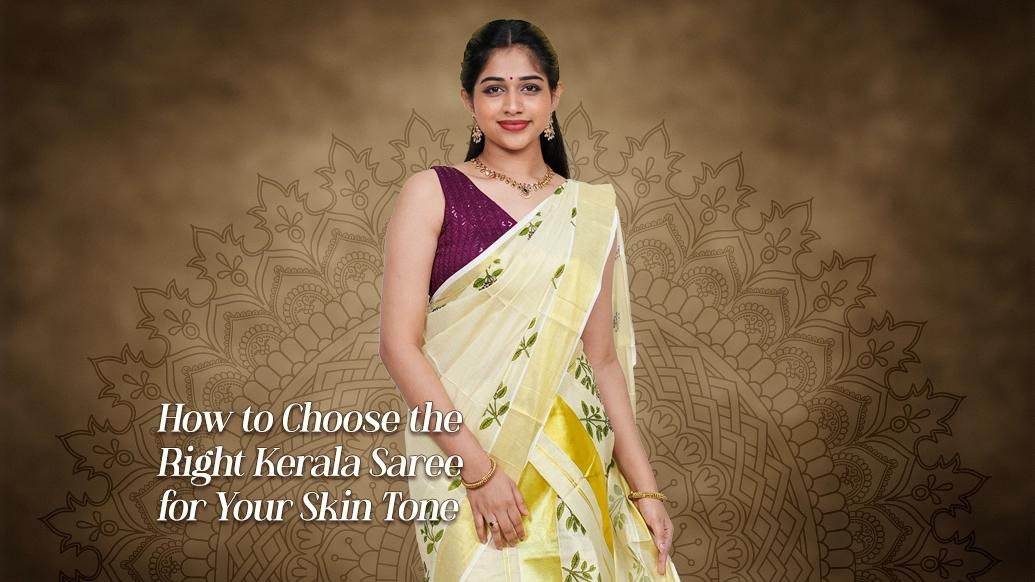
How to Choose the Right Kerala Saree for Your Skin Tone
Date: 14 May 2025
There's something particularly beautiful about a Kerala Saree. Whether it's the classic off-white foundation, the delicate gold kasavu borders, or the sheer minimalism that says so much, it is not just clothing — it's an identity stitched in threads. Worn at weddings, religious festivities such as Onam and Vishu, or even just to express cultural pride, the Kerala saree unites tradition with grace in a manner that few garments can. But amidst the beauty of the weft exists an understated styling skill most of us ignore — selecting the appropriate Kerala saree according to your complexion.
Too often, we pick sarees based on trend, convention, or whim. But just like makeup colors or jewelry, saree colors and fabrics can be suited (or mismatched) to your own natural skin color, changing the overall look of you. Getting the right shade not only highlights your beauty but also shows confidence, whereas making a wrong pick can leave you dull even amidst the most perfect drape. This blog takes you through how to pair Kerala sarees with your individual skin tone so you can celebrate your beauty.
Understanding the Basics: Skin Tone vs. Undertone
Prior to considering color suggestions, it's crucial to know two primary concepts: skin tone and undertone. While skin tone describes the color that appears on the skin's surface, such as pale, wheatish, dusky, or deep, undertone is the subtle, subdued color that dictates how your skin reacts to different colors.
If you've ever put on a gorgeous saree that just didn't "feel right," even when it looked gorgeous on someone else, there's a good chance that it clashed with your undertone. Understanding this can make you make wiser fashion decisions. Undertones are generally divided into:
- Cool undertones: Skin tones that are pink, red, or bluish are typical.
- Warm undertones: Peach, yellow, or golden tones are present in the skin.
- Neutral undertones: An even combination, providing leeway with most colors.
Your veins have a chilly undertone if they seem blue or purple. A cold undertone is present; the veins seem either purple or blue. You're lucky if you can't identify your undertone because you're most likely neutral!
Fair to Light Skin Tones
Light or fair skin tones tend to be weak and tend to reflect light rather easily. It means they would look bright against some colors but might also lose their luster when combined with very pale or muted colors. Kerala sarees, particularly traditional off-white and gold, have a tendency to get lost with lighter skin when there is inadequate contrast.
To upgrade fair skin, choose sarees with rich, dramatic border contrasts — consider maroon, navy blue, emerald green, or deep violet. These gem colors not only characterize the saree's drape but also make a beautiful frame for your face. If you are wearing a traditional Kasavu Saree, combining it with a bright or heavily embroidered blouse can provide the needed drama.
But it's preferable to steer clear of colors such as pale beige or lemon yellow that are too close to your natural color, particularly if the saree has no colored trim. The outcome could be an appearance that is washed out or disappointing in photos and in person.
Style tip: Go for a classic Kasavu saree with a bold maroon border, and pair it with a dark contrast blouse made of velvet or raw silk. Add gold jhumkas and a red bindi to strike a balance between tradition and statement style.
Medium to Wheatish Skin Tones
Wheatish or medium Indian skin tones have the benefit of versatility. Such tones are subtle enough to carry a large range of hues — from muted earth colors to vibrant party shades. The secret is in balancing: neither too pale nor too overwhelming.
If you fall in this group, go for the warm hues such as burnt orange, mustard yellow, peacock green, and deep rust. Not only do they mingle with your undertone, they impart that celebratory intensity. Kerala sarees with broad colored borders — particularly in cotton or soft silk — look great here, providing the perfect contrast against your skin tone.
Steer clear of harsh white or entirely gold-colored sarees with no second color in the picture, as these can make your skin look a bit dull, especially under bright lights. A saree with colored checks, zari work, or temple motifs can make you shine.
Style tip: Opt for an off-white Kerala saree with a rust-orange border and complement it with a terracotta-printed blouse. Top it off with some brass jewelry and earthy makeup for a down-to-earth, glowing look ideal for pujas or semi-formal events.
Dusky to Deep Skin Tones
Dusky and darker skin colors exude power, depth, and natural glow that fashion tends to underappreciate. The darker your skin, the brighter, more vibrant colors will just come out more in you. Unlike if you are light-skinned, you need not worry about the bold colors overwhelming you.
Opt for strong colors such as maroon, indigo, peacock blue, deep magenta, antique gold, and even black-edged Kasavu sarees. These hues add depth, enhance your skin's natural warmth, and photograph well. Opt for sarees with clean temple or zari borders — they serve as a stunning frame and provide structural elegance to your drape. Steer clear of overly pale or pastel tones, especially without rich borders or blouse contrasts. Your skin may appear flat with these colors because they lack definition.
Can fair individuals wear off-white Kerala sarees without looking washed out?
Yes, but it's better to pair them with contrasting borders like navy, maroon, or green. A pop of bright blouse adds balance and avoids pale skin.
What Kerala saree color suits dusky skin tones best?
Dusky skin comes alive with intricate colors such as deep red, magenta, antique gold, or peacock green. Dark contrasts and rich borders add warmth and definition to the saree.
Do blouse shades influence how the saree appears on my skin too?
Yes, the color of blouses complements your body and influence how well the saree fits your complexion. Brighter or different blouses make the saree look decent overall.
Kerala sarees for office wear or for going out informally?
Lightweight Kerala sarees in pastel shades of beige, olive, or mustard made of cotton are ideal to wear on a daily basis. Employ subtle temple borders or zari for a corporate but classical appearance.
What should not be worn if I have a wheatish or medium skin tone?
Avoid very light sarees with weak borders, as they will flatten your complexion. Warm hues of rust, copper, or mustard create brightness and depth.
What fabrics should I consider based on my skin tone?
Fair skin looks elegant in matte textures like cotton or linen, which reduce excessive shine. Deeper skin tones shine in glossy finishes like silk or tissue, especially in festive lighting.