Online orders are back! • ⚠️ Beware of scams and fake accounts • Our official Instagram is @mahalekshmisilks• For enquiries, use the contact numbers listed in our official social media video descriptions
Online orders are back! • ⚠️ Beware of scams and fake accounts • Our official Instagram is @mahalekshmisilks• For enquiries, use the contact numbers listed in our official social media video descriptions

The Timeless Journey of Kanchipuram Sarees: From Heritage Weaves to Modern Elegance
Date: 19 October 2026
Few Indian textiles carry the same sense of grandeur, craftsmanship and cultural identity as Kanchipuram sarees. Known for their luxurious silk, distinctive contrast borders, rich zari and heritage-inspired motifs, these sarees have remained an important part of South Indian dressing for generations.
Originating in Kanchipuram, Tamil Nadu, the saree has evolved from a traditional handwoven textile into one of India's most recognisable silk saree traditions. Today, Kanchipuram silk sarees are worn for weddings, festivals, religious ceremonies and milestone celebrations across India, including among saree lovers looking for a Kanchipuram silk saree in Kerala.
What makes their journey especially interesting is the way they continue to change without losing their identity. Deep reds, greens and maroons now sit alongside pastels, muted metallics and contemporary colour combinations. Heavy traditional borders coexist with lighter designs. Yet the craftsmanship and visual character that define the Kanchipuram saree continue to remain at the centre of its appeal.
Where Did Kanchipuram Sarees Originate?
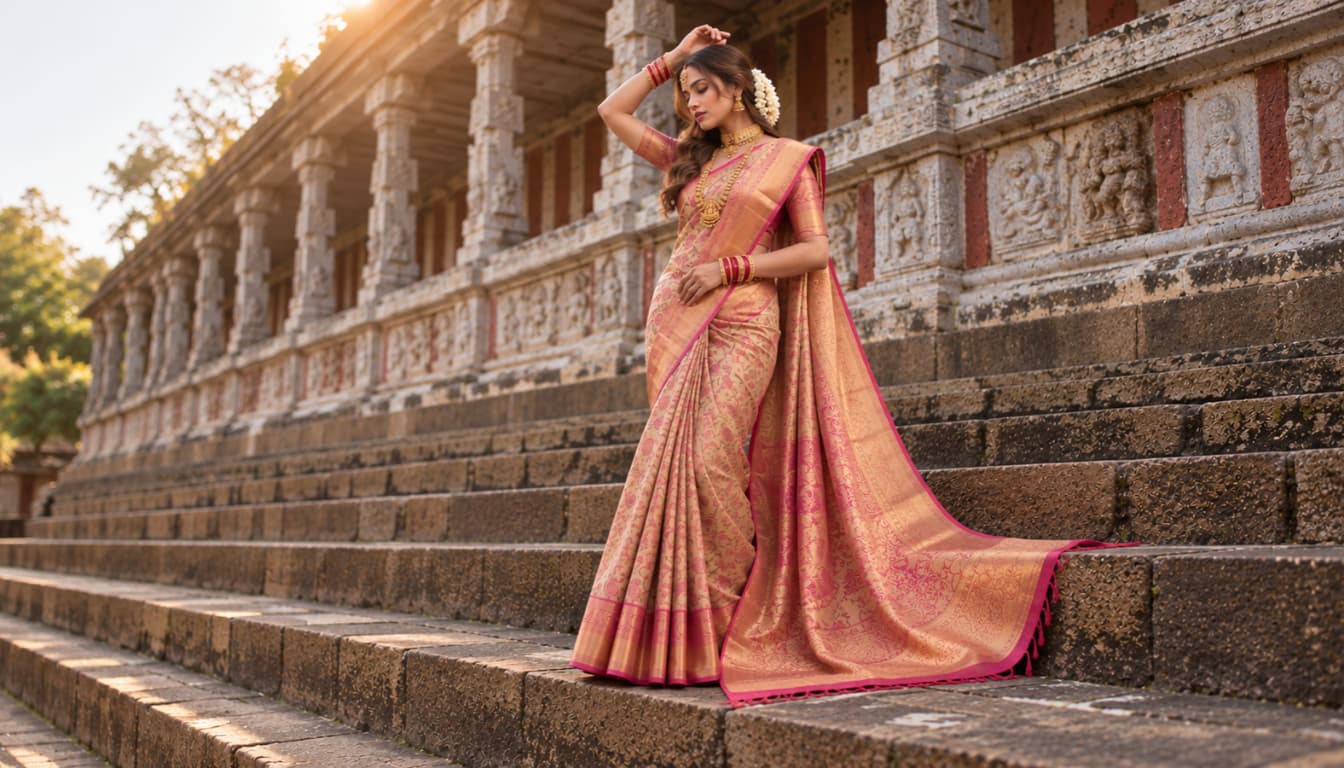
The story of Kanchipuram sarees begins in the historic temple town of Kanchipuram in Tamil Nadu.
Government handloom references trace the weaving tradition in the region back many centuries, with accounts connecting its development to royal patronage and to weaving communities such as the Devangas and Saligars. Kanchipuram's temples also played an important role in shaping the visual language of the textile.
Over time, the town became strongly associated with silk weaving.
The sarees produced there became known for their strength, vibrant colour combinations and elaborate use of zari.
Unlike a simple piece of cloth woven primarily for everyday wear, the traditional Kanchipuram saree developed as a ceremonial textile.
Its richness made it particularly suitable for weddings, religious functions and important family occasions.
This connection between place, craftsmanship and cultural tradition remains central to the identity of Kanchipuram silk even today.
Why Is Kanchipuram Known as a Silk and Temple City?
Kanchipuram has long been associated with both temples and silk weaving.
The architecture and sculpture found in the town's temples influenced many traditional saree motifs.
Borders often drew inspiration from temple forms, while motifs such as peacocks, yali figures, floral patterns, rudraksha-inspired forms and other decorative elements became part of the weaving vocabulary associated with the region.
This is one reason a traditional Kanchipuram saree often feels different from an ordinary decorative silk saree.
The motifs are not simply embellishments.
They represent visual ideas that have been carried through generations of weaving.
For many wearers, this connection to heritage is one of the strongest reasons Kanchipuram sarees remain meaningful.
The Heritage and Craftsmanship Behind Kanchipuram Sarees
The beauty of Kanchipuram silk sarees is not created by colour alone.
Its distinctive character comes from the construction of the saree itself.
Traditional Kanchipuram weaving uses mulberry silk along with zari, and the saree is known for a substantial structure and richly defined borders. Official India Handloom Brand material describes traditional Kanchipuram weaving using techniques such as Korvai for the contrast border and Petni for joining the contrasting pallu.
These techniques help create one of the most recognisable features of the saree: a body, border and pallu that can appear strongly contrasted while remaining structurally integrated.
What Is the Korvai Technique?
Korvai is one of the techniques traditionally associated with contrasting Kanchipuram borders.
Multiple shuttles are used so that the saree body and borders can be woven in different colours.
The threads are carefully interlocked, allowing the contrast border to become an integral part of the saree rather than simply appearing as an added decorative strip.
This makes the border visually striking and contributes to the architectural appearance often associated with traditional Kanchipuram sarees.
Korvai borders can be bold or relatively restrained depending on the design.
In more traditional sarees, the contrast may be dramatic—such as red with green, purple with orange or blue with maroon.
In contemporary designs, the difference may be subtler, using related shades or softer metallic tones.
What Is the Petni Technique?
The Petni technique is associated with creating a contrasting pallu.
The pallu may use a different warp colour from the main body of the saree, creating a clearly defined final section.
Traditional construction involves joining the new warp before weaving the contrast pallu.
This contributes to the distinctive visual separation between the saree body and pallu.
For the wearer, the effect is especially noticeable when the pallu is draped over the shoulder, allowing the richer contrast and zari work to become an important part of the overall look.
What Makes Kanchipuram Sarees Unique?
Several qualities help distinguish Kanchipuram sarees from many other silk sarees.
One of the most noticeable is their structure.
Traditional Kanchipuram silk tends to have a substantial feel, creating a graceful and defined drape.
The saree can hold pleats beautifully, which is particularly useful for bridal and ceremonial styling.
Another distinguishing feature is the relationship between the body, border and pallu.
Instead of treating these elements as one continuous decorative surface, Kanchipuram designs often use contrast deliberately.
This gives the saree a powerful visual identity.
The zari work also plays an important role.
Depending on the saree, zari may appear in broad borders, traditional motifs, checks, stripes, buttas or elaborate pallus.
Finally, there is the craftsmanship.
A carefully woven Kanchipuram saree represents technical skill, design planning and weaving knowledge that may have been passed between generations.
The Role of Zari in Traditional Kanchipuram Sarees
Zari is one of the elements most closely associated with classic Kanchipuram silk.
It brings richness to the border, motifs and pallu and helps give the saree its ceremonial appearance.
Traditional designs may feature broad gold-toned borders filled with geometric patterns, temple-inspired elements or floral forms.
The pallu can be even more elaborate, creating a dramatic finishing section.
For weddings, strong zari can make a saree feel especially grand.
However, modern Kanchipuram designs are also exploring more restrained ways of using metallic detailing.
Narrow borders, small zari motifs and less densely ornamented pallus are becoming attractive to women who prefer a cleaner look.
This shows how the saree can evolve while still retaining an important part of its traditional visual identity.
Traditional Motifs Found in Kanchipuram Sarees
One of the most fascinating aspects of Kanchipuram silk sarees is the variety of motifs used in their design.
Traditional motifs often draw from nature, mythology and temple architecture.
Peacock Motifs
The peacock has long appeared in Indian textiles and decorative arts.
In Kanchipuram sarees, peacock motifs can appear on the body, border or pallu.
The motif can be highly elaborate in bridal sarees or simplified into smaller repeating patterns for a more understated look.
Temple-Inspired Borders
Temple architecture has had a major influence on Kanchipuram design.
Triangular and geometric border patterns can resemble the visual rhythm of temple structures.
These designs give the saree a strongly traditional appearance and work particularly well with rich gold zari.
Floral Motifs
Flowers provide a softer decorative element.
Traditional floral designs can appear as small buttas scattered across the body or as larger patterns in the border and pallu.
Modern designs often reinterpret floral motifs in smaller scales or softer colours.
Yali and Mythological Motifs
Some heritage designs incorporate forms inspired by mythological creatures such as the yali, a decorative figure found in South Indian temple sculpture.
These motifs reinforce the close relationship between architecture, cultural symbolism and textile design.
How Kanchipuram Sarees Became a Bridal Favourite
Kanchipuram sarees have long held an important place in South Indian bridal wardrobes.
Their rich silk, strong colours and elaborate zari naturally suit the visual grandeur of a wedding.
Traditional brides often choose shades such as red, maroon, green, mustard, royal blue and deep purple.
These colours pair beautifully with gold jewellery and traditional bridal accessories.
The saree's structure also makes it suitable for ceremonial draping.
Pleats remain well defined, while the pallu provides enough visual weight to complement bridal jewellery and hair styling.
Government handloom references also identify the Kanchipuram silk saree as a traditional bridal garment.
But bridal fashion is changing.
Today, brides may still choose traditional weaving techniques while opting for pastel colours, lighter zari or unconventional blouse designs.
This ability to adapt has helped Kanchipuram sarees remain relevant to new generations of brides.
Kanchipuram Sarees in Kerala
The popularity of Kanchipuram sarees in Kerala reflects the wider appreciation of South Indian silk traditions.
Kerala has its own distinctive textile identity through kasavu sarees and set mundu, but Kanchipuram silk has long been valued for weddings and major celebrations where a richer silk appearance is desired.
A Kanchipuram silk saree in Kerala can be particularly popular for weddings, engagements, temple functions and important family events.
Kerala brides may select traditional red, maroon or green sarees, while others prefer shades that connect with Kerala's softer colour preferences.
Ivory, cream, muted gold, pastel green and soft pink can create an elegant fusion between Kanchipuram craftsmanship and Kerala bridal aesthetics.
Jewellery also plays an important role.
Traditional Kerala gold jewellery can pair beautifully with Kanchipuram silk, creating a bridal look that feels both regional and timeless.
The Evolution of Kanchipuram Saree Colours
Colour has always played a major role in Kanchipuram design.
Traditional colour combinations often relied on strong contrasts.
A bright red body might be paired with a deep green border.
Purple could appear alongside orange.
Royal blue might be combined with magenta or gold.
These contrasts gave traditional sarees their unmistakable visual energy.
Modern customers, however, have expanded the colour palette dramatically.
Pastel Kanchipuram Sarees
Blush pink, lavender, peach, mint green and powder blue have become attractive options for weddings and festive occasions.
These shades give the saree a softer character while allowing traditional zari and weaving details to remain visible.
Pastel Kanchipuram sarees are especially suitable for daytime events and brides who prefer understated elegance.
Ivory and Cream Kanchipuram Sarees
Ivory and cream offer a more minimal aesthetic.
These colours are particularly attractive to women looking for elegant ceremonial sarees without the intensity of darker traditional shades.
For customers seeking Kanchipuram sarees in Kerala, ivory-and-gold combinations can be especially appealing because they connect naturally with Kerala's traditional festive palette.
Jewel-Toned Kanchipuram Sarees
Deep emerald, ruby, wine, sapphire and plum continue to remain popular.
These colours preserve the regal character of classic silk while offering sophisticated alternatives to standard red and green.
From Heavy Borders to Minimal Zari
Traditional Kanchipuram sarees are often associated with broad, elaborate borders.
These borders can be one of the most visually dominant elements of the saree.
Today, however, buyers also have access to designs with slimmer borders and more restrained metallic detailing.
Minimal zari gives the saree a different personality.
It allows the silk colour to take greater visual importance and makes the saree easier to style with contemporary jewellery.
This approach is particularly popular among younger women and those who want a saree that can be worn multiple times after a wedding or major event.
A minimal Kanchipuram saree can work for receptions, festivals, formal dinners and family functions without feeling overly bridal.
The Rise of Lightweight Kanchipuram Styles
Traditional Kanchipuram silk is known for its substantial structure, but modern customers increasingly value comfort.
This has encouraged interest in sarees that preserve the visual language of Kanchipuram while feeling easier to drape and manage.
Lightweight styles are useful for women who expect to wear the saree for several hours.
They are also practical for destination weddings, receptions and functions where greater movement is required.
The shift toward comfort does not necessarily reduce elegance.
A lighter saree with a refined border, beautiful silk finish and carefully designed pallu can still create a highly luxurious look.
Kanchipuram Sarees Beyond Weddings
Although Kanchipuram sarees are strongly associated with bridal dressing, they are not limited to weddings.
A carefully chosen design can work for many occasions.
For festivals, rich silk colours paired with gold jewellery create a classic traditional look.
For temple visits and religious ceremonies, more understated designs can provide elegance without appearing excessively formal.
For engagements or family celebrations, pastel Kanchipuram sarees offer a softer approach.
For formal evening occasions, jewel tones with restrained zari can look sophisticated and contemporary.
This versatility has played a major role in keeping Kanchipuram silk sarees relevant across generations.
How Modern Blouses Have Changed the Kanchipuram Saree Look
The blouse has become one of the easiest ways to modernise a traditional saree.
Earlier styling often focused on matching silk blouses with relatively traditional cuts.
Today, women experiment with colour, fabric, sleeves, necklines and embroidery.
A classic red Kanchipuram saree can look completely different when paired with a high-neck blouse.
A pastel saree can be styled with a contrast raw-silk blouse.
A minimal Kanchipuram can be paired with an intricately embroidered blouse to create visual balance.
Elbow-length sleeves remain popular for traditional styling, while sleeveless or structured blouses can create a more contemporary appearance.
The important point is balance.
When the saree is heavily ornamented, a simpler blouse usually works better.
When the saree is minimal, the blouse can become the statement element.
How to Choose the Right Kanchipuram Saree
The best saree depends on where and how you plan to wear it.
For Weddings
Choose a saree with enough visual richness to complement bridal or wedding jewellery.
Traditional colours and larger borders create a regal appearance, while pastel and minimal designs work for modern bridal styling.
For Festivals
Look for a balance between richness and comfort.
Green, maroon, mustard, purple and red are timeless choices.
A medium-width zari border often provides enough festive character without making the saree feel overly formal.
For Receptions and Evening Functions
Deeper jewel tones, metallic finishes and elegant contrast pallus work beautifully in evening lighting.
You can also experiment with more contemporary blouse designs.
For Repeat Wear
If you want a saree that can be worn frequently, choose a versatile colour, moderate border and balanced zari.
Minimal designs are often easier to restyle with different blouses and jewellery.
How Can You Recognise a Genuine Kanchipuram Silk Saree?
Authenticity should not be judged only by shine, weight or price.
Traditional Kanchipuram construction is associated with particular weaving methods, including Korvai borders and Petni pallus. Official India Handloom Brand guidance also notes that interlocking can be visible at the border and that the pallu join may show characteristics of the traditional construction.
Buyers should therefore pay attention to craftsmanship, construction and product information.
It is also useful to ask the seller about the type of silk, zari composition, weaving method and place of production.
Kancheepuram Silk is a registered Geographical Indication in India. The GI registry lists it as a registered handicraft associated with Tamil Nadu.
For an important purchase such as a bridal saree, choosing a trusted retailer and requesting clear product information is always advisable.
Why Kanchipuram Sarees Are Considered Heirloom Pieces
One reason families value Kanchipuram silk is its association with durability and ceremonial importance.
A saree purchased for a wedding may later be worn for anniversaries, family functions or religious celebrations.
Over time, it can become connected to memories rather than simply remaining an item of clothing.
This emotional value is what turns many traditional silk sarees into heirloom pieces.
A daughter may wear her mother's saree with a new blouse.
A traditional saree may be restyled with contemporary jewellery.
An older bridal saree may appear again at an important family event.
This ability to move between generations is one of the most beautiful parts of the Kanchipuram saree story.
Why Kanchipuram Sarees Continue to Appeal to Younger Generations
Heritage alone does not guarantee that a textile will remain fashionable.
Kanchipuram sarees continue to appeal because designers, retailers, weavers and customers constantly reinterpret them.
Younger women can now choose from traditional reds and greens as well as champagne, lavender, blush pink, teal, beige and muted gold.
They can pair heritage borders with minimal jewellery.
They can style an old saree with a completely new blouse.
They can choose smaller motifs, lighter visual detailing or simpler pallus.
The saree therefore offers something rare: tradition without requiring every wearer to look exactly the same.
Traditional Kanchipuram or Modern Kanchipuram: Which Should You Choose?
Neither style is inherently better.
Traditional Kanchipuram sarees are ideal when you want strong heritage character, bold colour contrast and elaborate zari.
Modern styles are ideal when you prefer softer shades, lighter detailing and more versatile styling.
The most interesting sarees often combine elements of both.
You might choose a pastel body with a traditional temple border.
You might select a classic red saree with minimal zari.
Or you may style an heirloom saree with a contemporary blouse.
The goal should be to select a saree that feels appropriate for the occasion while still reflecting your personality.
How to Care for Kanchipuram Silk Sarees
Proper care is important if you want a silk saree to retain its beauty over time.
Avoid leaving the saree folded along the same lines for very long periods.
Refolding it occasionally can reduce stress on permanent creases.
Store the saree in a breathable fabric covering rather than trapping it in unsuitable plastic for long-term storage.
Keep it away from direct sunlight and damp environments.
Heavy zari sarees should be handled carefully when folding so the metallic areas do not rub unnecessarily against other parts of the fabric.
For cleaning, follow professional care instructions appropriate for silk and zari rather than experimenting with harsh detergents at home.
Good care can help a special saree remain wearable for many years.
Where do Kanchipuram sarees come from?
Kanchipuram sarees originate from Kanchipuram in Tamil Nadu, a historic temple city with a long silk-weaving tradition.
Why are Kanchipuram silk sarees famous?
They are known for rich silk, contrasting borders, elaborate zari, distinctive pallus, traditional motifs and specialised weaving techniques.
Are Kanchipuram sarees suitable for weddings?
Yes. Kanchipuram sarees are among the most recognised South Indian wedding sarees and are frequently chosen by brides and wedding guests.
What is special about Kanchipuram saree borders?
Traditional contrast borders can be created using the Korvai technique, in which different sections are carefully interlocked during weaving.
What is the Petni technique?
Petni refers to a traditional method used to create and join a contrasting pallu with the saree body.
Are Kanchipuram sarees available in modern colours?
Yes. In addition to traditional red, green and maroon, modern styles include pastels, ivory, beige, champagne, teal, lavender and other contemporary shades.
Can Kanchipuram sarees be lightweight?
Traditional Kanchipuram sarees are known for a substantial structure, but contemporary collections can include lighter designs intended to provide easier draping and greater comfort.
Are Kanchipuram sarees popular in Kerala?
Yes. Kanchipuram sarees Kerala shoppers often choose them for weddings, engagements, festivals and important family functions.
Which Kanchipuram silk saree is suitable for Kerala weddings?
Ivory and gold, red and gold, maroon, green, pastel pink and muted gold can all work beautifully depending on the bride's jewellery and wedding style.
Can a Kanchipuram saree be worn more than once?
Absolutely. With different blouses, jewellery and draping styles, the same saree can be restyled for weddings, festivals, anniversaries and family celebrations.
How should I choose a Kanchipuram saree for long-term use?
Look for a colour you can wear across different occasions, balanced zari, a versatile border and a design that can work with multiple blouse colours.